Choosing the right binoculars for low light means balancing brightness, detail, stability, and portability. Larger objective lenses can help at dawn, dusk, and under dark skies, but they may also add weight and require steadier handling.
This roundup compares 10 selected models across wildlife viewing, birding, hunting, travel, and astronomy. Use the guide below to match magnification, optics, durability, and viewing style to your needs.
Best 10 Binoculars for Low Light Picks for 2026
Adventure-Ready Low-Light Value

- 50mm objectives for brighter dim-light views
- Waterproof, nitrogen-purged body
- Tripod-adaptable with 10x magnification
Best For: Wildlife viewing, hiking, and outdoor observation
Full-Dark Recording Specialist
Mossy Oak 4K Night Vision Goggles

- 850nm infrared for complete darkness
- 4K video and 40MP photos
- 5000mAh battery and 64GB card included
Best For: Night scouting, wildlife recording, and property checks
Premium Detail at Dawn and Dusk

- ED glass reduces color fringing
- 50mm objectives and 5.6mm exit pupil
- Phase-coated BaK-4 prisms and waterproof build
Best For: High-detail birding and wildlife viewing in dim light
Compact All-Weather Performer

- HD optics and fully multi-coated lenses
- Waterproof, fogproof, and shock-resistant
- Compact 10x42 design with lifetime VIP Warranty
Best For: General outdoor viewing, hiking, birding, and hunting
Long-Range Low-Light Value

- 20x power with 50mm objective lenses
- Coated optics and BAK4 Porro prisms
- Waterproof rubberized outdoor body
Best For: Distant wildlife, hunting, and stargazing
Reliable All-Rounder

- HD fully multi-coated optics
- Waterproof, fog proof, and shockproof
- Includes GlassPak harness and lifetime warranty
Best For: Hiking, hunting, and everyday wildlife viewing
Twilight Detail Specialist

- 52mm lenses for low-light observation
- 15x magnification with coated BAK4 optics
- Universal smartphone adapter included
Best For: Dawn, dusk, and overcast wildlife viewing
Best for Astronomy

- 80mm lenses support bright low-light views
- 20x magnification for distant subjects
- Tripod-ready heavy-duty design
Best For: Stargazing and extended nighttime observation
Best Portable High-Power Pick

- 20x magnification with 56mm light-gathering lenses
- Waterproof design weighs about 1.2 pounds
- Focusing controls include a diopter ring
Best For: Portable long-distance viewing at dawn or dusk
Best All-Weather Value
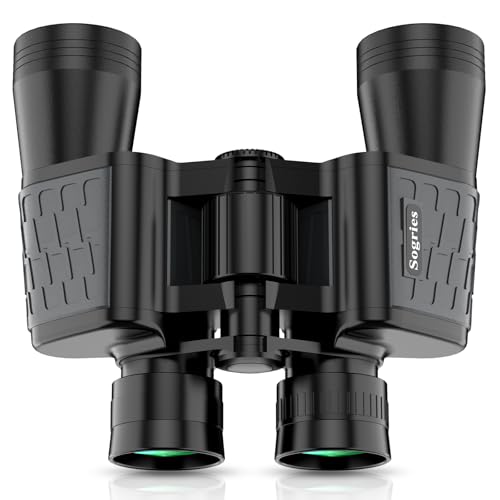
- 5mm exit pupil supports low-light viewing
- IPX7 waterproof and fog-proof construction
- Wide 6.5-degree field of view
Best For: Birding, travel, and general outdoor use
Adventure-Ready Low-Light Value – Celestron Outland X 10×50
For shoppers comparing binoculars for low light, the Celestron Outland X combines 10x magnification with large 50mm objectives to produce bright views for wildlife, hiking, and outdoor observation. Multi-coated optics and BaK-4 prisms support sharp, color-accurate images, while the waterproof, nitrogen-purged housing is built for changing weather.
Best For: Wildlife and outdoor users who want bright low-light views in a rugged, tripod-adaptable design.
Pros:
- 50mm objectives and 4.8mm exit pupil support brighter views in dim conditions.
- Multi-coated optics and BaK-4 prisms help deliver detailed, natural-looking images.
- Waterproof, nitrogen-purged, rubber-armored construction is suitable for demanding outdoor use.
- Includes a limited lifetime US warranty and US-based technical support.
Cons:
- At 0.76 kg, it is less convenient for extended handheld use than smaller binoculars.
- A tripod adapter is required for tripod mounting and is not included.
The Outland X is a practical choice when light-gathering ability and weather protection matter more than the smallest possible size. Its 5.6-degree field of view also helps when scanning broad areas or tracking moving subjects.
Full-Dark Recording Specialist – Mossy Oak 4K Night Vision Goggles
The Mossy Oak 4K Night Vision Goggles take a different approach to binoculars for low light, using 850nm infrared illumination for viewing in complete darkness. Along with day and low-light modes, they record 4K video and 40MP photos, making them useful when documenting wildlife, checking property, or scouting after sunset.
Best For: Nighttime observation, wildlife recording, camping, farm patrol, and yard security.
Pros:
- 850nm infrared night vision supports viewing in complete darkness.
- Offers 4K video at 30fps and 40MP photo capture.
- 12x digital zoom and a claimed night-vision range up to 984 feet expand observation options.
- Includes a built-in 5000mAh rechargeable battery and 64GB TF card.
Cons:
- The built-in lithium battery is non-removable.
- Digital zoom is not the same as optical magnification and may prioritize reach over image detail.
- The plastic enclosure may feel less rugged than armored optical binoculars.
This is best viewed as a digital night-vision camera with binocular-style viewing rather than a conventional optical binocular. Its screen, infrared modes, recording features, and file-transfer support make it especially useful when capturing evidence or sharing observations matters.
Premium Detail at Dawn and Dusk – Celestron Nature DX ED 10×50
For demanding users choosing binoculars for low light, the Celestron Nature DX ED pairs 10x magnification and 50mm objectives with Extra-Low Dispersion glass. ED optics help reduce color fringing, while fully multi-coated lenses and phase-coated BaK-4 prisms support bright, sharp, true-to-life views in dim conditions.
Best For: Birdwatchers, hikers, and wildlife observers who prioritize optical clarity and low-light detail.
Pros:
- ED objective lenses help minimize chromatic aberration and color fringing.
- Large 50mm objectives and a 5.6mm exit pupil support brighter dusk and dawn viewing.
- Dielectric- and phase-coated BaK-4 prisms maximize light transmission.
- Waterproof, nitrogen-purged body and tripod adaptability support extended outdoor use.
Cons:
- At 806g, it is relatively substantial for handheld carry.
- A tripod adapter is not included.
- Its 10x magnification can make steady handheld viewing more demanding.
The Nature DX ED is the strongest conventional optics choice here for viewers who want low-light brightness without giving up color fidelity and fine detail. Its premium glass and prism coatings justify choosing it over a more basic 10×50 model when image quality is the priority.
Compact All-Weather Performer – Vortex Crossfire HD 10×42
The Vortex Crossfire HD 10×42 is a compact option for shoppers seeking binoculars for low light without moving to larger 50mm objectives. Select HD glass elements, fully multi-coated lenses, and a 4.2mm exit pupil support resolution, color fidelity, and light transmission for birdwatching, hiking, hunting, and other outdoor activities.
Best For: Users who want a versatile, compact binocular for general outdoor viewing and changing weather.
Pros:
- HD optical elements help reduce chromatic aberration and improve edge-to-edge sharpness.
- Fully multi-coated lenses increase light transmission across air-to-glass surfaces.
- Waterproof, fogproof, and shock-resistant construction is suited to demanding environments.
- Includes adjustable eyecups, tripod adaptability, and Vortex’s unlimited lifetime VIP Warranty.
Cons:
- 42mm objectives and a 4.2mm exit pupil gather less light than the 50mm models in this roundup.
- Its 10x magnification may require extra steadiness when viewing at dusk.
- It weighs 1.4 pounds, so it is compact but not especially lightweight.
The Crossfire HD is a balanced everyday choice rather than a specialized full-dark device. Choose it for portability, broad outdoor usefulness, and rugged protection; choose a 50mm model if maximum low-light brightness is the deciding factor.
Long-Range Low-Light Value – FLYA 20×50 Binoculars
If you need binoculars for low light with strong magnification, the FLYA 20×50 combines a 50mm objective lens, multilayer-coated optics, and a BAK4 Porro prism. Its 20x magnification is suited to distant viewing, while the waterproof rubberized body supports outdoor use.
Best For: Long-distance bird watching, hunting, stargazing, and outdoor activities where low-light capability and high magnification matter.
Pros:
- 20x magnification and 50mm objective lenses support detailed distant viewing.
- Multilayer-coated lenses and BAK4 Porro prisms are designed to improve light transmission and image brightness.
- Waterproof, shock-resistant rubber construction offers a secure grip outdoors.
- Large 26mm eyepieces and a soft center focus wheel support extended viewing comfort.
Cons:
- The 20x magnification can be more demanding to hold steadily than lower-power binoculars.
- With a 2.5mm exit pupil, it may be less forgiving in very dim conditions than lower-magnification models.
- The body weighs about 0.89 kg, making it less convenient for lightweight travel.
This is a practical pick when reach is more important than portability. The combination of high magnification and coated 50mm optics suits twilight outdoor observation, but a tripod may be helpful for steadier long-distance viewing.
Reliable All-Rounder – Vortex Triumph HD 10×42
The Vortex Triumph HD is a balanced choice among binoculars for low light, pairing 10x magnification with 42mm objective lenses and fully multi-coated HD optics. Nitrogen purging adds fog-proof protection, while the compact full-size design is practical for hikes and hunts.
Best For: Bird watching, hunting, hiking, and general outdoor viewing when you want a portable, weather-resistant option with dependable optics.
Pros:
- HD optics and fully multi-coated lenses support resolution, color fidelity, and light transmission.
- 10×42 configuration offers a useful balance of magnification, brightness, and portability.
- Nitrogen purging makes the binoculars waterproof and fog proof.
- Includes a GlassPak harness, neck strap, and lens covers, with tripod adaptability and a lifetime warranty.
Cons:
- The 42mm objectives gather less light than larger 50mm or 52mm models.
- Its 17mm eye relief may be less accommodating for some glasses wearers than longer-eye-relief designs.
- At 10x, it provides less distant detail than the higher-powered alternatives in this roundup.
The Triumph HD is the most versatile everyday option here. Its 4.2mm exit pupil, coated HD optics, and weather protection make it well suited to changing outdoor conditions without the bulk of a high-power model.
Twilight Detail Specialist – 15×52 HD Binoculars
These 15×52 HD binoculars are designed specifically for binoculars for low light, with large objective lenses, high-transmission glass, and BAK4 dielectric-coated prisms. They also include a universal smartphone adapter for recording distant observations.
Best For: Hunting, bird watching, and wildlife observation at daybreak, dusk, or under overcast skies, especially when phone capture is useful.
Pros:
- 52mm objective lenses and specialized high-transmission glass target low-light viewing.
- 15x magnification provides detailed views of distant subjects.
- Fully multi-coated lenses and phase-corrected BAK4 roof prisms support contrast and color fidelity.
- Included smartphone adapter is designed to hold phones securely, with or without cases.
Cons:
- 15x magnification may be harder to hold steady than 10x binoculars.
- The larger 52mm objectives can add bulk compared with compact 42mm models.
- The supplied notes do not specify waterproof or fog-proof protection.
This model is the strongest fit for users who prioritize twilight performance and distant detail. Its wide eyepiece, adjustable eyecups, and phone adapter add practical value, though a stable support may improve results at 15x.
Best for Astronomy – Aurosports 20×80 Binoculars
For serious stargazing and distant nighttime viewing, these binoculars for low light pair 20x magnification with oversized 80mm objective lenses. Their BAK4 prisms and fully multi-coated optics are designed to produce bright, high-contrast views at dusk and in other low-light settings.
Best For: Astronomy, moon viewing, star clusters, and extended wildlife observation from a tripod.
Pros:
- Large 80mm lenses gather substantial light for low-light viewing.
- 20x magnification brings distant celestial and landscape details closer.
- BAK4 prisms and FMC optics support bright, sharp images.
- Includes a carrying case, neck strap, and cleaning cloth.
Cons:
- At 8.45 pounds, they are too heavy for steady handheld use.
- A tripod is required but is sold separately.
- The large format is less convenient for casual travel.
This is the most light-gathering option in the group, but its heavy-duty design makes it a specialized choice. Plan on using a sturdy tripod to take full advantage of its astronomy-focused performance.
Best Portable High-Power Pick – Pankoo 20×56 Binoculars
These binoculars for low light offer a practical balance between high magnification and portability. The 20x power, 56mm lenses, BAK4 roof prisms, and fully multi-coated optics are suited to bright viewing at dawn, dusk, and during long-distance outdoor observation.
Best For: Hunting, landscape scanning, sports, concerts, bird watching, and travelers who want high power in a lighter package.
Pros:
- 56mm lenses capture abundant light for dawn and dusk viewing.
- 20x magnification helps with long-distance subjects.
- BAK4 roof prisms and FMC lenses provide sharp, true-color images.
- Waterproof, shock-resistant construction weighs about 1.2 pounds.
Cons:
- The high 20x magnification can make steady viewing more demanding.
- The 2.75mm exit pupil is smaller than that of the 10×50 option.
- Large lenses may be less compact than conventional travel binoculars.
With its unusually light weight for 20x binoculars, this model is a versatile choice for users who want reach without carrying an astronomy-sized instrument. Its waterproof build also suits varied outdoor conditions.
Best All-Weather Value – Sogries 10×50 Binoculars
For general-purpose binoculars for low light, the Sogries 10×50 model combines a useful 5mm exit pupil with fully multi-coated lenses and BAK4 prisms. Its 10x magnification and wide 6.5-degree field of view make it suitable for birding, travel, sports, and nighttime sky viewing.
Best For: Bird watching, travel, cruises, hiking, sports, and users who want waterproof, fog-proof binoculars.
Pros:
- 50mm lenses and a 5mm exit pupil support low-light viewing.
- Wide 342-foot field of view at 1,000 yards helps track moving subjects.
- IPX7 waterproof and fog-proof construction suits wet conditions.
- Includes a bag, cleaning cloth, lens covers, and shoulder strap.
Cons:
- 10x magnification offers less reach than the two 20x models.
- At 1.28 kg, it is not the lightest travel option.
- Manual focusing requires adjustment for different viewing distances.
This is the most balanced choice for everyday outdoor use, especially when weather protection and a broad field of view matter more than maximum magnification. It is a strong fit for birding and travel with occasional stargazing.
How We Picked the Best Binoculars for Low Light
We focused on specifications and features that matter when available light is limited: objective-lens size, magnification, optical construction, focusing controls, weather resistance, weight, and intended use. Models with 50mm or larger objective lenses can gather more light than compact designs, while ED glass and quality coatings may improve contrast and color control.
The selection also includes conventional optical binoculars and digital night-vision goggles. These are not interchangeable: traditional binoculars rely on ambient light, while digital devices use electronic sensors and often infrared illumination.
Quick Comparison
| Best For | Typical Strength | Potential Trade-Off |
|---|---|---|
| Wildlife and general low-light viewing | 10×50 optics | Heavier than 10×42 models |
| Premium nature viewing | ED glass and improved contrast | Higher cost |
| Birding and travel | 10×42 balance of size and brightness | Less light-gathering capacity |
| Astronomy | Large objectives and high magnification | Often needs a tripod |
| Viewing in very dark conditions | Digital night vision and infrared | Battery dependence and processed imagery |
Key Buying Factors for Binoculars for Low Light
Objective Lens and Exit Pupil
The second number in binocular specifications is the objective-lens diameter in millimeters. A 10×50 model has 50mm front lenses and generally gathers more light than a 10×42 model. Divide objective diameter by magnification to estimate exit pupil: larger values can appear brighter, particularly when your eyes are dark-adapted.
Magnification and Stability
Higher magnification reveals distant detail but also magnifies hand movement. 10x binoculars are a practical all-purpose choice. Models at 15x, 20x, or more are better suited to astronomy or long-range observation and may benefit from a tripod or monopod.
Optical Quality and Focusing
Look for fully multi-coated lenses, phase-corrected prisms where applicable, and ED glass if color fringing and contrast are priorities. A smooth center focus, usable diopter adjustment, and comfortable eyecups are important during extended viewing.
Weather Protection and Handling
Waterproof and nitrogen-purged construction helps protect against rain and internal fogging, but it does not make binoculars indestructible. Check weight, grip texture, strap attachment, and whether the body is comfortable to hold with gloves.
Who Should Buy Which Binoculars for Low Light?
Choose a 10×50 model for wildlife, hunting, or general dawn-and-dusk use when brightness matters more than minimum weight. A 10×42 binocular is the better compromise for birding, hiking, and travel. Select an ED-equipped model when sharper contrast and cleaner detail justify spending more.
For astronomy, consider a 15x, 20x, or 20×80 design, but plan for a stable support system. Digital night-vision goggles are the more appropriate choice for observing in near-total darkness, especially when recording photos or video matters. Finally, larger high-powered binoculars can be appealing for distance viewing, but verify their weight, field of view, and mounting requirements before buying.