Bike lights with auto brightness adjust illumination to changing conditions, helping riders stay visible without constantly reaching for a button. The right setup can make commutes, night rides, and early-morning trips safer and easier.
We selected 10 smart front and rear lights across different riding needs, from high-output headlights and AI-assisted modes to compact brake-sensing tail lights. Use the guide below to compare brightness, sensors, runtime, mounting, and weather resistance before buying.
Best 10 Bike Lights with Auto Brightness Picks for 2026
Best Value Auto-Sensing Headlight
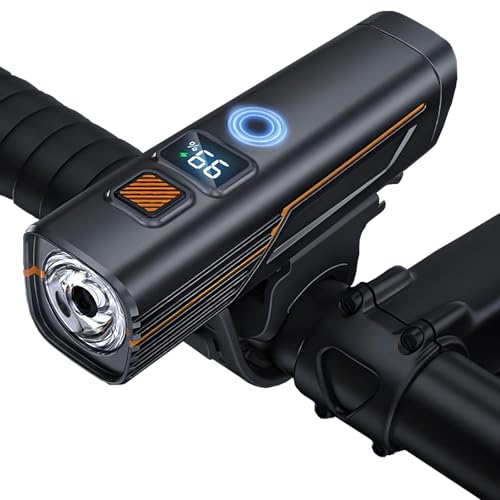
- Auto sensor adjusts light for changing conditions
- Digital display shows remaining battery percentage
- USB-C rechargeable with five lighting modes
Best For: Commuters wanting simple automatic control and battery visibility
Best for Garmin Users

- Up to 800 lumens for urban and trail riding
- Adjusts output using light, speed, and ride profile
- Pairs with compatible Edge computers
Best For: Connected cyclists who already use Garmin Edge devices
Best Long-Range Smart Light
RAVEMEN K1800 Smart Bike Light

- AI mode adapts brightness to riding conditions and power
- Up to 28 hours of steady-light runtime
- IPX7 housing with 180-degree visibility
Best For: Frequent riders seeking adaptive lighting and long battery life
Best Smart Rear Light
ROCKBROS Brake-Sensing Tail Light
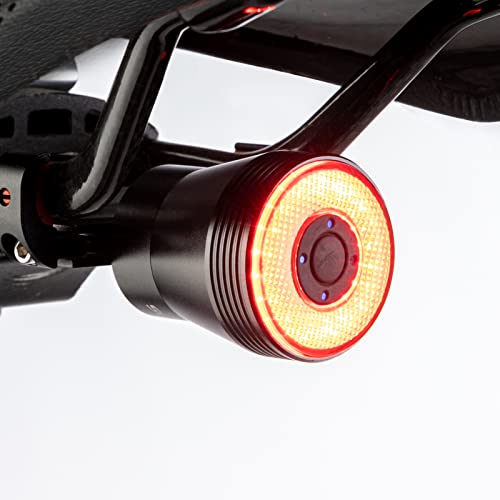
- Brake sensor flashes when you slow down
- Motion and light sensors automate operation
- Up to 50 hours of use with a power indicator
Best For: Cyclists wanting automated rear visibility and brake alerts
Best Lightweight Combo
MagicShine URBO Front & Rear Set

- 300-lumen cut-off headlight with 50-lumen rear light
- Brake sensing and vibration-activated rear light
- 77g combined weight with IPX6 protection
Best For: Commuters wanting a light, automated front-and-rear setup
Best Smart Headlight
RAVEMEN K700 Auto-Off Bike Light

- Up to 700 lumens with smart daytime mode
- Light and vibration sensors with auto shutoff
- IPX7 aluminum body and two mounting options
Best For: Urban riders needing a bright, durable front light
Best Set-and-Forget Set
Smart Ambient-Sensing Bike Lights

- Automatic activation in dark environments
- Front-and-rear set with 212-lumen output
- Digital power display and tool-free silicone straps
Best For: Casual riders wanting simple automatic visibility
Best Smart Front Light

- 530-lumen multi-mode front beam
- Auto mode and USB-C rechargeable battery
- Lightweight IPX6 aluminum body
Best For: Everyday riders wanting an automatic front light
Best Heavy-Duty Pick
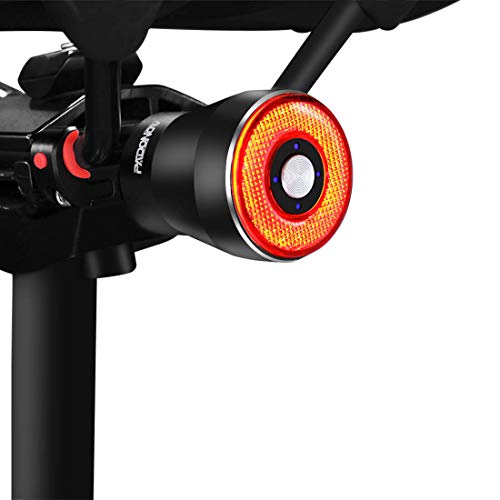
- Automatic light and motion sensing
- Brake light boosts brightness when slowing
- USB-C charging with up to 50-hour runtime
Best For: Cyclists needing an automatic rear warning light
Best Front-and-Rear Set
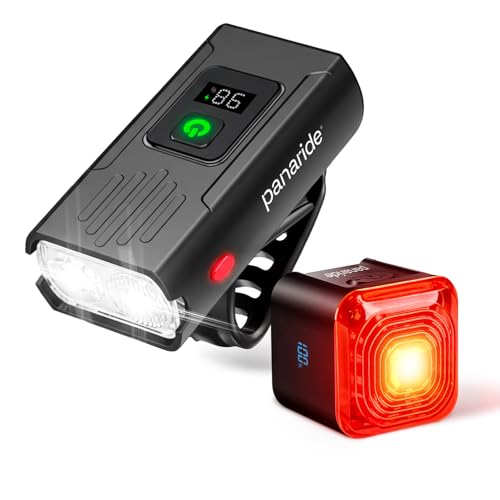
- 500-lumen front light with six modes
- Automatic rear brake sensing
- USB-C rechargeable two-light setup
Best For: Riders wanting a complete automatic light set
Best Value Auto-Sensing Headlight – High-Lumen Smart Bike Light
If you want bike lights with auto brightness for everyday riding, this headlight combines a light sensor with five lighting modes. Its digital battery display, USB-C charging, and quick-release handlebar mount make it practical for commuting and short night rides.
Best For: Daily commuters and recreational cyclists who want automatic light control and a visible battery readout.
Pros:
- Light sensor can turn the light on or off and adjust illumination in sensor mode.
- Five modes include Auto Sensor, high, medium, low, and flash.
- Digital screen shows the remaining battery percentage.
- USB-C charging, water-resistant construction, and a quick-release mount support regular use.
Cons:
- Approximate runtime is 3–4 hours, which may be limited for longer rides.
- The notes do not specify the maximum lumen output.
- It is designed to resist rain and splashes but should not be submerged.
This is a straightforward choice when automatic brightness and battery visibility matter more than a stated high-end lumen rating. The sensor mode reduces manual adjustments, while the rechargeable design suits routine cycling.
Best for Garmin Users – Varia UT 800 Smart Headlight
The Garmin Varia UT 800 is a strong option for riders seeking bike lights with auto brightness and cycling-computer integration. It uses ambient light, speed, and ride profile data to adjust output, while its 800-lumen maximum is suited to urban and trail riding.
Best For: Garmin Edge users and cyclists who want a premium smart headlight with automatic control.
Pros:
- Automatically adjusts to ambient light, speed, and ride profile to help extend battery life.
- Produces up to 800 lumens and is visible in daylight from more than one mile.
- Works independently or pairs with compatible Edge computers for lighting control.
- Offers five modes, including high, medium, low, night flash, and day flash.
Cons:
- Steady 800-lumen operation lasts up to 1.5 hours.
- Some smart functions require a compatible Edge cycling computer.
- It is a front headlight only, so a separate rear light is needed for all-around visibility.
Choose the UT 800 if automatic brightness and connected cycling features are priorities. Its short maximum-runtime figure makes it better suited to planned rides or riders who can recharge between outings.
Best Long-Range Smart Light – RAVEMEN K1800 Smart Bike Light
The RAVEMEN K1800 stands out among bike lights with auto brightness because its AI Night Ride Mode learns riding patterns and adjusts brightness according to ambient light and remaining power. It also provides daytime sensing, wide-angle visibility, and a long claimed runtime for extended cycling.
Best For: Frequent commuters, touring cyclists, and riders who want adaptive lighting with extensive battery life.
Pros:
- AI Night Ride Mode learns a nighttime routine and manages brightness automatically.
- Daytime intelligent mode can pulse in bright conditions and use mid-brightness in lower light.
- Claims up to 28 hours of steady light, with low-power operation when the battery runs low.
- IPX7 waterproof aluminum housing and 180-degree wide-angle visibility suit varied riding conditions.
Cons:
- The AI mode requires five days of nighttime riding to learn a routine.
- Its 181-gram weight is heavier than some compact bike lights.
- The optional helmet accessory is not included.
With its learning-based mode, smart daytime behavior, and long stated runtime, the K1800 is aimed at riders who want minimal manual adjustment. The upside-down mount also helps preserve handlebar space.
Best Smart Rear Light – ROCKBROS Brake-Sensing Tail Light
For riders focused on rear visibility, this ROCKBROS tail light adds automatic behavior to a brake-sensing design. While it does not provide front-light brightness control, its motion and light sensors can switch the light on during movement and off after inactivity.
Best For: Road, mountain, cruiser, and scooter riders who want an automated rear safety light with brake detection.
Pros:
- Brake sensing triggers a high-intensity flash for five seconds when slowing down.
- Motion and light sensors support automatic on/off operation in selected modes.
- Four modes include normal flash, breathing flash, fast flash, and steady on.
- Up to 50 hours of use and a four-level power indicator help with battery planning.
Cons:
- Auto on/off applies only to the normal-flash and breathing-flash modes.
- This is a rear tail light, not a front headlight for illuminating the road.
- The supplied details list both IPX6 and IP65 ratings, so the exact rating is unclear.
This light is a useful complement to an automatic front headlight, especially for riders who value brake signaling. Its long stated runtime and seat-mount options make it practical for daily visibility.
Best Lightweight Combo – MagicShine URBO Front & Rear Set
For riders who want bike lights with auto brightness-style convenience in a complete safety package, the MagicShine URBO COMBO pairs a 300-lumen cut-off headlight with a rear light featuring vibration activation and smart braking. Its lightweight design, long runtime, and weather resistance suit regular commuting and everyday rides.
Best For: Commuters and road cyclists seeking a lightweight front-and-rear set with automatic tail-light activation.
Pros:
- Includes both front and rear lights in one purchase.
- Cut-off headlight beam helps illuminate the road without blinding oncoming traffic.
- Tail light includes a smart brake sensor and vibration-activated auto on/off.
- IPX6 protection, USB-C charging, quick-release mounts, and battery indicators add practicality.
Cons:
- The front light offers up to 14.5 hours in flash, while the rear runtime varies by mode.
- At 300 lumens, the headlight is less powerful than some high-output commuter lights.
The URBO COMBO stands out for its 77-gram combined weight and thoughtful front-and-rear automation. It is a particularly convenient choice when visibility from multiple directions matters more than maximum headlight output.
Best Smart Headlight – RAVEMEN K700 Auto-Off Bike Light
The RAVEMEN K700 is a strong option for shoppers comparing bike lights with auto brightness features. Its light and vibration sensors support a smart daytime mode that adjusts operation to surrounding conditions, while inactivity shutoff helps conserve battery when you stop.
Best For: Urban cyclists who want a bright, durable front light with sensor-assisted operation and flexible mounting.
Pros:
- Provides up to 700 lumens with four additional lighting modes beyond smart daytime mode.
- Light and vibration sensors support automatic mode adjustment and restart after movement.
- Offers both standard handlebar and under-mounted installation without tools.
- IPX7 waterproof aluminum housing and USB-C charging suit demanding everyday use.
Cons:
- This is a front light only, so a separate rear light is needed for full bike visibility.
- At 138 grams, it is substantially heavier than the lightweight URBO combo.
With high output, robust construction, and a two-minute inactivity shutoff, the K700 is well suited to riders who prioritize front-light performance and smart operation. Its mounting flexibility is also useful for bikes with crowded handlebars.
Best Set-and-Forget Set – Smart Ambient-Sensing Bike Lights
This front-and-rear set brings bike lights with auto brightness-style ambient sensing to commuters, families, and casual riders. The lights activate in darker settings such as tunnels or nightfall and switch off in bright environments, helping simplify routine rides while conserving power.
Best For: Casual commuters, road-bike users, and kids’ bikes needing simple automatic front-and-rear visibility.
Pros:
- Ambient light sensors automatically activate in darkness and switch off in bright conditions.
- Includes front and rear lights with a 212-lumen front beam.
- Digital power display helps monitor remaining light status.
- Tool-free silicone straps fit handlebars, seat posts, backpacks, and electric scooters.
Cons:
- IPX4 protection is lower than the IPX6 and IPX7 ratings of the other options.
- Runtime is listed at up to five hours per charge.
- The integrated lithium battery is non-removable.
This set emphasizes simplicity rather than maximum output or ruggedness. Its automatic ambient sensing, universal straps, and included rear light make it a practical choice for everyday visibility on shorter rides.
Best Smart Front Light – Navi 500
The Navi 500 is a practical choice for riders seeking bike lights with auto brightness and automatic operation. Its 530-lumen multi-mode front beam, 2450 mAh battery, USB-C charging, and IPX6-rated aluminum body suit everyday rides and changing weather.
Best For: Cyclists who want a lightweight, rechargeable front light with auto mode and flexible mounting.
Pros:
- Auto mode can help extend standby time.
- Five light modes and a wide beam support varied riding conditions.
- Lightweight aluminum construction, USB-C charging, and IPX6 water resistance.
- Tool-free mounting includes a handlebar bracket and GoPro adapter.
Cons:
- It is a front light only, so a separate rear light is needed for full-bike visibility.
- The listed maximum output varies between the title and specifications.
Choose the Navi 500 if you prioritize a compact, durable front lamp with automatic operation. Its broad mounting compatibility also makes it useful beyond standard bicycles.
Best Heavy-Duty Pick – Padonow Smart Tail Light
The Padonow Smart Bike Tail Light is a focused rear-light option for riders comparing bike lights with auto brightness. Its light and motion sensors automate activation, while three brightness levels and a brake-light boost improve visibility behind you.
Best For: Commuters and road cyclists who want an automatic rear warning light with brake sensing.
Pros:
- Automatically turns on with movement and responds to surrounding light conditions.
- Brake light becomes three times brighter than normal during braking or stopping.
- USB-C charging and claimed runtime of up to 50 hours.
- Mounts to saddle rails or a seatpost and weighs about 2 ounces.
Cons:
- It provides rear visibility only and does not replace a front headlight.
- Its IPX5 rating is below the stronger water protection offered by some front lights.
This tail light stands out for riders who want visibility features to work with minimal input. The automatic sensing and brake alert are useful additions for traffic-heavy routes.
Best Front-and-Rear Set – R15 Smart Bike Light Kit
The R15 kit is a convenient option for riders looking for bike lights with auto brightness across both ends of the bicycle. It combines a 500-lumen dual-LED headlight with a rear light featuring automatic brake sensing, plus USB-C charging and tool-free mounting.
Best For: Riders who want one rechargeable set for front illumination and rear braking visibility.
Pros:
- Includes both front and rear lights for more complete visibility.
- Rear light automatically intensifies when braking.
- Front light offers six modes, including high and low beams, while the rear has four modes.
- USB-C charging, flexible mounting, aluminum construction, and a five-year warranty.
Cons:
- The supplied details do not specify an IP rating.
- Battery runtime figures are not provided.
The R15 makes sense for cyclists who prefer a matched front-and-rear setup rather than buying lights separately. Its automatic brake sensing adds a practical safety feature, while the multiple beam modes accommodate roads and darker trails.
How We Picked the Best Bike Lights with Auto Brightness
We evaluated these lights by focusing on the features that matter during real rides: automatic brightness or light-sensing behavior, useful beam output, runtime, charging convenience, visibility modes, mounting security, and water resistance. We also considered whether each model works best as a headlight, tail light, or complete front-and-rear safety system.
Automatic controls are useful, but they should complement—not replace—manual settings. A dependable light should still offer a mode that suits dark roads, shared paths, traffic-heavy streets, or daytime visibility.
Quick Comparison
| Best For | Look For |
|---|---|
| Dark-road riding | High lumens, focused beam, and multiple output modes |
| Urban commuting | Auto brightness, side visibility, and simple controls |
| Brake awareness | Rear light with brake sensing and bright flash patterns |
| Long rides | Extended runtime, battery indicator, and USB-C charging |
| All-weather use | Secure mounting and a suitable IP water-resistance rating |
Key Buying Factors for Bike Lights with Auto Brightness
Brightness and Beam Pattern
More lumens do not automatically mean better visibility. For unlit roads, prioritize a powerful, controlled beam that illuminates the lane without excessively dazzling others. City riders may prefer moderate output with side visibility and strong daytime flashing.
Sensor Behavior and Manual Control
Check whether the light changes brightness based on ambient light, riding conditions, or a dedicated smart mode. Auto-on and auto-off functions can save battery and improve convenience, while manual override is valuable when conditions change quickly.
Runtime and Charging
Compare runtime at the brightness level you will actually use, not only the lowest setting. Battery indicators, USB-C charging, and replaceable or high-capacity batteries are useful for commuters and long-distance riders.
Rear Visibility and Brake Sensing
A rear light should remain visible from a practical distance and offer a clear flash pattern. Brake sensing is especially helpful in traffic because it can signal deceleration without requiring a separate control.
Mounting and Weather Resistance
Choose a mount that fits your handlebar, seatpost, or under-mounted position and stays secure over bumps. For regular outdoor use, look for a stated water-resistance rating and a charging port that can be protected when riding in wet conditions.
Who Should Buy Which Bike Lights with Auto Brightness?
Night riders on unlit roads should choose a high-output front light with a focused beam, dependable runtime, and enough adjustment range for changing conditions. Daily commuters will benefit from automatic brightness, easy charging, and quick-release mounts. Riders who mainly need to be seen can choose a compact front-and-rear set with flashing modes and strong side visibility.
If traffic safety is your priority, pair a bright headlight with a brake-sensing rear light. For long rides, prioritize battery capacity and a visible charge indicator over maximum peak brightness. Finally, riders who dislike frequent adjustments should look for models combining auto brightness, auto-on or auto-off operation, and simple manual controls.