DJI Osmo Nano 128GB review: this tiny 4K wearable camera is built for creators who want fast-deploy POV filming without carrying a bulky rig.
It is especially appealing for travel, sports, family moments, and pet-level shots.
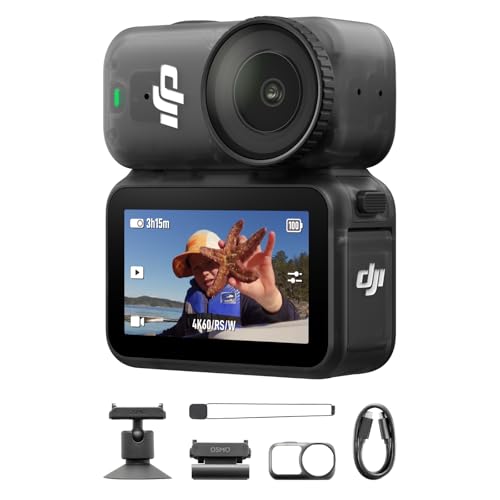
DJI Osmo Nano Review Summary
DJI Osmo Nano 128GB is a smart buy for creators who value portability first. It combines a 1/1.3-inch CMOS sensor, 4K/60fps video, a 143° ultra-wide field of view, and 128GB of built-in storage into an ultra-compact body that is easy to wear, mount, and forget about while you shoot.
If you want a camera that can capture immersive POV content with minimal setup, the DJI Osmo Nano 128GB fits the brief extremely well.
It is not a traditional all-purpose camera replacement, but that is also the point.
The DJI Osmo Nano 128GB is designed for quick action, spontaneous moments, and creator workflows where convenience matters as much as image quality.
For vloggers, travelers, and action users, it offers a compelling balance of speed, stabilization, and flexibility.
Scorecard
| Category | Score | Takeaway |
|---|---|---|
| Image quality | 9.0/10 | 1/1.3-inch sensor, 4K/60fps, and 10-bit D-Log M support give it strong detail and editing flexibility. |
| Wide-angle capture | 9.0/10 | The 143° field of view is excellent for immersive POV shots and action framing. |
| Portability | 10/10 | Its ultra-light, pocketable magnetic design is the core advantage. |
| Battery and runtime | 8.0/10 | Up to 200 minutes is strong for the size, but heavy use will still require planning. |
| Audio flexibility | 8.0/10 | Direct support for two microphones is a real creator benefit. |
| Storage and workflow | 9.0/10 | 128GB built in plus microSD expansion makes it easy to start shooting immediately. |
| Durability and outdoor use | 8.0/10 | Waterproofing to 10m and splash resistance with the Vision Dock broaden its use case. |
Bottom line: if you want a tiny wearable camera that actually feels practical for everyday filming, DJI Osmo Nano 128GB is worth serious consideration.
Its best strengths are convenience, wide-angle capture, and creator-friendly features, while its main tradeoffs are heat management and the niche nature of the form factor.
Key Features and Specifications of DJI Osmo Nano
The DJI Osmo Nano 128GB is clearly engineered around portability and quick content creation.
Below is a practical breakdown of the most important specs and what they mean in real-world use.
| Specification | Details |
|---|---|
| Brand / Model | DJI Osmo Nano (128GB) |
| Sensor | 1/1.3-inch CMOS |
| Video resolution | 4K |
| Frame rate | 4K/60fps |
| Field of view | 143° ultra-wide |
| Color | Black |
| Storage | 128GB built in, microSD expandable |
| Connectivity | Bluetooth, Wi-Fi |
| Image stabilization | Digital |
| Water resistance | Waterproof up to 10m; IPX4 splash resistance with Vision Dock |
| Weight | 124 g |
| Dimensions | 2.33 x 2.72 x 1.09 in |
| Screen | 1.96 in |
| Battery life | Up to 200 minutes |
| Audio format | 48 kHz 16-bit AAC |
| Video format | MP4 |
| Still resolution | 35 MP |
| Maximum aperture | f/2.8 |
| Maximum focal length | 17 mm |
Those numbers tell a clear story.
The camera is small enough for hands-free POV shooting, but still large enough to house a serious sensor and meaningful creator features.
That combination is what gives the DJI Osmo Nano 128GB its edge over many tiny action cams and body cameras.
- 1/1.3-inch CMOS sensor: better light capture and more detailed footage than tiny sensor wearables.
- 4K/60fps: smoother motion for sports, travel, and dynamic scenes.
- 143° field of view: ideal for dramatic POV and vlog framing.
- 10-bit D-Log M: gives editors more room to grade colors.
- 128GB built in: reduces setup friction and helps you start shooting right away.
- MicroSD support: useful if you record often or want easier offloading.
- Direct dual-mic support: a strong plus for creators who care about clean spoken audio.
- Waterproof to 10m: adds confidence for outdoor and water-adjacent shooting.
Pros and Cons of DJI Osmo Nano
Here is the practical DJI Osmo Nano 128GB pros and cons breakdown from a buyer’s perspective.
| Pros | Cons |
|---|---|
| Very small and lightweight for carry-anywhere use | Compact body can build heat during long high-resolution sessions |
| Strong 4K/60fps image quality with a larger sensor for its size | Best app experience requires downloading DJI Mimo from DJI’s official site |
| Wide 143° framing suits POV and action content | Battery life is good for the size but not enough for all-day heavy filming without planning |
| Magnetic mounting adds speed and flexibility | Less appealing if you want a more traditional general-purpose compact camera |
| Built-in 128GB storage reduces friction | Underwater and splash protection depend on using the system as intended |
| External mic support improves creator audio workflows | Digital stabilization will not fully replace a larger gimbal system in every scenario |
The biggest advantage is convenience. The biggest drawback is that its tiny size inevitably comes with some compromises, especially during long recordings and in very demanding conditions.
Who Should Buy DJI Osmo Nano?
DJI Osmo Nano 128GB is a strong fit for creators who want a fast, wearable, and low-friction camera. It is especially useful if you care more about capturing the moment than assembling a larger setup.
- Vloggers who want a camera that is easy to mount, easy to carry, and quick to start using.
- Action-sports users who want immersive POV footage without a bulky body.
- Travelers who prefer a pocketable camera with built-in storage.
- Parents and families who want hands-free recording for everyday memories.
- Pet POV creators looking for a lightweight, wearable angle.
- Editors and hobby creators who want 10-bit color flexibility and wide-angle footage.
It is less ideal for buyers who need a larger screen-first camera, extended uninterrupted studio recording, or a single device that replaces both a main camera and a wearable action cam.
If that is your use case, a bigger action camera or compact vlogging camera may be a better match.
How the magnetic mount changes shooting angles
The magnetic design is one of the main reasons the DJI Osmo Nano 128GB stands out.
Instead of treating mounting as a clunky accessory step, DJI makes quick angle changes part of the experience.
That matters because wearable cameras are only useful if you actually use them often.
The magnetic mount makes the camera feel spontaneous. You can switch from chest-level POV to a low pet perspective or a quick vertical clip without slowing down the shoot much.
For creators who film in short bursts, that speed is worth more than a lot of extra spec-sheet hype.
This also helps the DJI Osmo Nano 128GB feel more natural for daily life.
When a camera is easy to place, remove, and reposition, you end up capturing more usable footage.
That is a major practical advantage over cameras that require more accessories or more setup time.
Best use cases for vlogs, sports, and pet POV
The DJI Osmo Nano 128GB is not trying to be the best camera for everything.
It is trying to be very good at a specific set of use cases, and that focus is a strength.
For vlogging, the ultra-wide 143° field of view makes it easy to stay in frame while still showing surroundings.
That works particularly well for walking clips, travel storytelling, and casual on-the-go updates.
The 10-bit D-Log M color option also matters if you want a more polished final look.
For sports, 4K/60fps and digital stabilization are the combination that counts.
You get smoother motion and enough resolution to crop or reframe later if needed.
The waterproofing to 10m also makes it more credible for outdoor activities than many tiny cameras.
For pet POV or family moments, the small size is the real win.
A camera this compact is less intrusive and easier to wear for longer stretches.
If your goal is to capture a dog’s-eye view, a kid’s-eye perspective, or candid family activity, the DJI Osmo Nano 128GB is well aligned with that workflow.
If you mainly shoot static talking-head videos, though, a larger camera may be easier to live with.
The Osmo Nano is built for movement, not just sitting on a desk.
Audio setup and external microphone support
Audio is often where small cameras disappoint, so the DJI Osmo Nano 128GB deserves credit for creator-friendly flexibility.
Direct support for two microphones is a real workflow benefit, especially if you record interviews, voiceovers, or narrated vlogs.
The built-in audio format, 48 kHz 16-bit AAC, is perfectly reasonable for a compact camera, but it is not the same thing as professional external audio.
That is why the microphone support matters so much.
If audio quality is important to you, this camera gives you a path to improve it.
That said, creators should still think about their setup.
If you are planning solo vlogs, a compact wireless mic can make the DJI Osmo Nano 128GB much more versatile.
If you want simple point-and-shoot convenience without accessories, the internal audio is fine for casual clips, but it should not be the main reason you buy this camera.
Waterproofing, splash resistance, and outdoor confidence
Outdoor durability is another area where this camera makes sense.
Being waterproof to 10m gives you real flexibility for beach days, pool use, and wet environments.
The IPX4 splash resistance with the Vision Dock adds convenience for everyday outdoor filming, though you still need to respect the limits of any accessory-based protection.
This is a genuine travel and action advantage. You do not have to baby the camera the way you might with a more delicate compact camera.
For buyers who record hiking clips, water sports, or family vacations, that peace of mind counts.
The caution is simple: compact cameras can overheat or face recording limits in harsh conditions.
DJI includes overheat protection that automatically stops recording to protect the hardware, which is reassuring, but it also means you should not expect infinite high-bitrate recording in very hot or demanding situations.
For longer sessions, Endurance Mode is the smarter choice.
Storage options and transfer workflow
Storage is one of the most underrated reasons to like the DJI Osmo Nano 128GB.
Built-in 128GB storage means you are not immediately dependent on a memory card to get started, which lowers friction when you want to capture something fast.
On top of that, microSD expansion keeps the system flexible.
That is important for creators who shoot a lot of 4K footage, since larger video files can fill storage quickly.
Wi-Fi and Bluetooth support help round out the workflow, making it easier to move content, pair accessories, and manage clips in the field.
For many buyers, this is the practical sweet spot: built-in storage for convenience, expandable storage for volume, and transfer options that fit a modern creator setup.
The only real drawback is that, as with many DJI products, the app experience can require a small learning curve.
DJI Mimo should be downloaded from DJI’s official website rather than Google Play, which is an extra step that some users may find inconvenient.
How DJI Osmo Nano 128GB compares with alternatives
When judging is DJI Osmo Nano 128GB worth it, it helps to compare it with familiar alternatives.
The biggest competition is not just from DJI’s own lineup, but from established compact action and wearable cameras.
- GoPro HERO action camera: better known for rugged versatility and a huge accessory ecosystem.
Choose GoPro if you want a broader action-cam platform, especially for more traditional mounting use.
- Insta360 GO wearable camera: a close concept competitor for ultra-light hands-free shooting.
Pick Insta360 GO if your top priority is tiny size and creative mounting flexibility.
- DJI Osmo Action camera: better if you want a more conventional action camera with a larger body and a more general-purpose feel.
- Sony compact vlogging camera: a better fit for buyers who want a more traditional hand-held vlogging tool rather than a wearable POV device.
- Small 4K body camera: useful if your priority is a straightforward body-worn recording device without DJI’s creator-focused extras.
Compared with these, the DJI Osmo Nano 128GB stands out for its blend of premium sensor size, strong wide-angle framing, built-in storage, and magnetic convenience.
It is not the cheapest or the most universal choice, but it is one of the more thoughtfully designed wearable options.
DJI Osmo Nano Review Summary
To sum it up, the DJI Osmo Nano 128GB is a niche product in the best possible sense: it knows exactly what it wants to be.
It is a tiny, capable, creator-friendly camera for users who want to record life from a different angle without dragging around a full-size setup.
Buy it if you want the easiest path to high-quality POV video, fast mounting, built-in storage, and respectable battery life in a very compact body. Skip it if you need long-form recording, a more traditional camera shape, or a system that is meant to replace your main camera.
For the right buyer, the DJI Osmo Nano 128GB is one of those products that quickly becomes part of your daily carry.
It is the kind of camera you are more likely to use because it gets out of the way and lets you film.
Is DJI Osmo Nano Worth It?
Yes, DJI Osmo Nano 128GB is worth it for the right type of user. If your goal is to capture high-quality, ultra-wide, wearable footage with minimal setup, it delivers exactly the kind of experience that makes small cameras genuinely useful instead of merely interesting.
The value case is strongest for travelers, vloggers, sports users, and anyone who wants a pocketable camera with built-in storage and flexible mounting.
The camera’s main weaknesses are the normal ones for this category: heat buildup during demanding sessions, limited all-day runtime, and a form factor that is not ideal for every shooting style.
Final verdict: choose the DJI Osmo Nano 128GB if portability, POV video, and creator convenience are your top priorities.
If you want a compact camera that encourages you to shoot more often, this one makes a strong and practical case for itself.