The best running watches make it easier to track pace, distance, routes, recovery, and progress without carrying a phone on every workout. The right model depends on whether you prioritize focused training tools, smartwatch features, long battery life, or simple timing.
We compare 10 options across Garmin, Amazfit, and Timex, including GPS fitness smartwatches, dedicated running watches, and a classic Ironman model for straightforward workout tracking.
Best 10 Running Watches Picks for 2026
Best Overall

- Built-in GPS with wrist-based heart rate
- Adaptive workouts and recovery guidance
- Up to 11 days of smartwatch battery
Best For: Runners seeking focused training features in a lightweight watch
Best for Navigation

- Offline maps with turn-by-turn directions
- Six-satellite GPS support
- Advanced running-form metrics
Best For: Runners exploring new routes without relying on a phone
Best Wellness Features
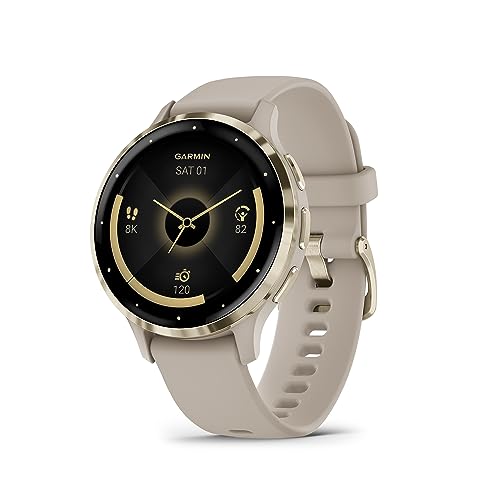
- Sleep, nap, stress, and Body Battery tracking
- Built-in GPS with recovery features
- Up to 10 days of smartwatch battery
Best For: Runners balancing training with broader wellness tracking
Best Battery Value

- Up to 14 days of battery life
- GPS with downloadable maps and directions
- 140+ workout modes
Best For: Runners prioritizing long battery life and versatility
Premium Training Pick
Garmin epix Pro (Gen 2) Sapphire

- Sapphire lens and titanium build
- Advanced running and recovery metrics
- Multi-band GPS with detailed maps
Best For: Serious runners and multisport athletes
Simple Interval Pick

- 100-hour chronograph with 30-lap memory
- Countdown timer and three alarms
- 100-meter water resistance with INDIGLO
Best For: Simple interval and lap timing
Everyday Fitness Pick

- Up to 11 days of smartwatch battery
- GPS sports apps and Garmin Coach
- Sleep, recovery, and Body Battery insights
Best For: Everyday runners and fitness users
Best All-Around Pick

- AMOLED display with touchscreen and buttons
- Up to 23 hours of GPS battery life
- Personalized training and recovery insights
Best For: Runners seeking a versatile training smartwatch
Best Value for New Runners

- Up to two weeks in smartwatch mode
- Daily suggested workouts and PacePro guidance
- Tracks GPS pace, distance, route, and heart rate
Best For: Runners wanting simple training support and long battery life
Best Renewed Option

- Core GPS and heart-rate running tracking
- Up to two weeks of smartwatch battery life
- Includes PacePro and suggested workouts
Best For: Budget-focused runners comfortable buying renewed electronics
Best Overall – Garmin Forerunner 165
The Garmin Forerunner 165 is a focused choice for runners who want built-in GPS, responsive training guidance, and a bright AMOLED display without a bulky design. Its combination of buttons and touchscreen makes it practical for everyday running and workouts.
Best For: Runners who want adaptive training features, recovery guidance, and a lightweight 43 mm watch.
Pros:
- Built-in GPS and wrist-based heart-rate tracking measure pace, distance, and effort.
- Personalized daily suggested workouts adapt to performance and recovery.
- Offers up to 11 days of smartwatch battery life and up to 19 hours in GPS mode.
- Includes a bright AMOLED touchscreen plus traditional button controls.
Cons:
- Safety features require a compatible smartphone with network coverage.
- Garmin Pay availability depends on supported countries and payment networks.
The Forerunner 165 stands out as a running-first smartwatch with useful training-effect and recovery-time tools. It is a strong fit for runners who want structured guidance and reliable daily usability.
Best for Navigation – Amazfit Active 3 Premium
The Amazfit Active 3 Premium is one of the more navigation-oriented running watches in this roundup. It pairs a durable stainless steel frame and sapphire glass with offline maps, turn-by-turn directions, and multi-satellite GPS support.
Best For: Runners who explore unfamiliar routes and want offline navigation plus detailed form metrics.
Pros:
- Supports precise GPS tracking through six satellite systems.
- Offline maps provide turn-by-turn directions and automatic rerouting without a phone.
- Tracks running power, lactate threshold, posture, and ground contact time.
- Offers up to 12 days of battery life and a bright 1.32-inch AMOLED display.
Cons:
- Voice-to-text replies are listed as Android compatible.
- Its deeper running metrics may be more than casual runners need.
With durable materials, route guidance, and coaching for distances from 5K to marathon, the Active 3 Premium is designed for runners who want more than basic pace and distance tracking.
Best Wellness Features – Garmin Venu 3S
The Garmin Venu 3S is a wellness-focused option among these running watches, combining built-in GPS and running support with detailed sleep, stress, and recovery features. Its 41 mm design and colorful display suit runners who also want an everyday health smartwatch.
Best For: Runners who prioritize sleep, recovery, wellness tracking, and phone-connected smartwatch features.
Pros:
- Body Battery, sleep coaching, nap detection, and HRV status support recovery awareness.
- Provides built-in GPS, wrist-based heart rate, workout benefit, and recovery time.
- Supports phone calls, voice responses, notifications, and downloaded music.
- Offers up to 10 days of battery life in smartwatch mode.
Cons:
- Some communication features require pairing with a compatible smartphone.
- Music services such as Spotify, Amazon Music, and Deezer require premium subscriptions.
The Venu 3S is a versatile choice for runners who want training tools alongside extensive health and lifestyle features. It is less narrowly running-focused than the Forerunner 165 but more comprehensive for all-day wellness tracking.
Best Battery Value – Amazfit Bip 6
The Amazfit Bip 6 offers a large, bright AMOLED display, built-in GPS, and extensive activity tracking in a lightweight design. For runners who dislike frequent charging, its stated 14-day battery life makes it a practical everyday option.
Best For: Runners wanting long battery life, route navigation, and broad workout tracking at a glance.
Pros:
- Up to 14 days of battery life reduces the need for frequent charging.
- Supports GPS tracking through five satellite systems plus downloadable maps and turn-by-turn directions.
- Includes more than 140 workout modes, including HYROX Race and strength training.
- Monitors heart rate, sleep, blood oxygen, and stress.
Cons:
- The supplied specifications list 512 MB of storage and 64 MB of RAM.
- Maps and connected communication features may still require initial phone setup.
The Bip 6 is a strong convenience-focused pick for runners who want navigation and health tracking without nightly charging. Its large screen and broad workout selection also make it useful beyond running.
Premium Training Pick – Garmin epix Pro (Gen 2) Sapphire
The Garmin epix Pro (Gen 2) Sapphire is a feature-rich choice for runners who want advanced training data, detailed navigation, and a durable design. Its AMOLED display, sapphire lens, running power, hill score, endurance score, and multi-band GPS make it one of the most capable running watches in this roundup.
Best For: Serious runners and multisport athletes who want extensive training, recovery, navigation, and health-tracking features.
Pros:
- Scratch-resistant sapphire lens, titanium construction, and 100-meter water resistance.
- Advanced running tools include wrist-based running power, hill score, endurance score, and pacing modes.
- Multi-band positioning, multi-GNSS, TopoActive maps, and Up Ahead navigation support outdoor training.
- AMOLED display, built-in flashlight, sleep monitoring, HRV status, and training readiness add everyday versatility.
Cons:
- Its extensive feature set may be more than casual runners need.
- The 70-gram titanium design is heavier than a basic sports watch.
- Pulse Ox availability varies by country, and the health data is intended as an estimation rather than medical advice.
The epix Pro is the strongest option here for runners who prioritize deep performance analysis and outdoor navigation. Choose it if premium materials and advanced metrics matter more than simplicity.
Simple Interval Pick – Timex Ironman Classic 30
The Timex Ironman Triathlon Classic 30 is a straightforward digital option for runners who prefer dependable timing tools over smartwatch features. It combines a 100-hour chronograph, 30-lap memory, countdown timer, customizable alarms, and 100-meter water resistance in a compact resin case.
Best For: Runners who want an affordable, easy-to-use training watch for intervals, laps, and everyday scheduling.
Pros:
- 100-hour chronograph with memory for up to 30 laps.
- 24-hour countdown timer and three customizable alarms support structured workouts.
- Two time zones plus day, date, and month display are useful for travel and daily planning.
- INDIGLO backlight and 100-meter water resistance suit day-to-day training.
Cons:
- It does not provide GPS, heart-rate tracking, or app-connected running metrics.
- The acrylic lens is less scratch-resistant than sapphire or mineral alternatives.
- Battery-powered operation requires eventual battery replacement.
This Timex is a practical choice when the essentials are lap timing, alarms, and durability. It is best for runners who already use a phone or other device for distance and route tracking.
Everyday Fitness Pick – Garmin vívoactive 5
The Garmin vívoactive 5 balances running tools with broad health and fitness features in a lighter, everyday smartwatch. Its AMOLED display, built-in GPS, up to 11 days of smartwatch battery life, recovery guidance, and Garmin Coach support make it a versatile choice for runners building consistent training habits.
Best For: Everyday runners who want GPS workouts, recovery insights, wellness tracking, and phone-free music.
Pros:
- Up to 11 days of battery life in smartwatch mode and a bright AMOLED display.
- More than 30 indoor and GPS sports apps include running, cycling, swimming, and HIIT.
- Sleep score, Body Battery, recovery time, workout benefit, and Garmin Coach support training consistency.
- Music downloads from Spotify, Amazon Music, or Deezer enable phone-free listening with wireless headphones.
Cons:
- It offers fewer specialized running and navigation features than the epix Pro.
- Health metrics are intended as close estimations and are not medical measurements.
- Its 42mm format and feature set may not suit shoppers seeking a traditional, minimalist running watch.
The vívoactive 5 is a well-rounded middle ground for runners who want more than basic timing without stepping up to a premium adventure smartwatch. Its training, wellness, and music features make it especially useful for regular fitness routines.
Best All-Around Pick – Forerunner 70
For runners who want a modern training companion, the Garmin Forerunner 70 combines built-in GPS, wrist-based heart-rate tracking, an AMOLED touchscreen, and button controls. Its personalized coaching, recovery insights, and broad activity support make it a versatile choice among running watches.
Best For: Runners who want detailed training and recovery guidance in a lightweight smartwatch.
Pros:
- AMOLED touchscreen with button controls and a lightweight 1.4-ounce design.
- Up to 23 hours of GPS battery life and up to 13 days in smartwatch mode.
- Includes Garmin Coach plans, suggested workouts, training readiness, and recovery metrics.
- Offers more than 80 activity profiles plus safety and tracking features when paired with a smartphone.
Cons:
- Some safety and live-location features require a paired smartphone and network coverage.
- Garmin notes that wellness and training data are close estimates rather than medical measurements.
The Forerunner 70 is the strongest fit here for runners who want more than basic pace and distance tracking. It adds a brighter display and deeper readiness and recovery tools while retaining practical running features.
Best Value for New Runners – Forerunner 55
The Garmin Forerunner 55 focuses on essential running features without unnecessary complexity. It tracks pace, distance, route, and wrist-based heart rate with GPS, while suggested workouts and PacePro guidance support structured training.
Best For: Runners who want straightforward training tools and long battery life at a practical price.
Pros:
- Up to two weeks of battery life in smartwatch mode and up to 20 hours in GPS mode.
- Provides daily suggested workouts based on training history, fitness level, and recovery.
- PacePro offers GPS-based pace guidance for a selected course or distance.
- Includes race predictions, finish-time estimates, and multiple activity profiles.
Cons:
- The display is a sunlight-visible MIP screen rather than an AMOLED panel.
- PacePro is not compatible with on-device courses.
- Some customization features require the Garmin Connect and Connect IQ apps with a compatible smartphone.
For runners prioritizing reliable basics and battery endurance, the Forerunner 55 remains a sensible option. Its button-based controls and training suggestions keep the experience focused on running.
Best Renewed Option – Renewed Forerunner 55
The renewed Garmin Forerunner 55 delivers the same core running feature set as the standard model, including GPS, wrist-based heart-rate monitoring, suggested workouts, and PacePro pace guidance. It is worth considering for shoppers comfortable with a renewed device.
Best For: Budget-conscious runners who want Forerunner 55 features in a renewed package.
Pros:
- Tracks running pace, distance, route, and wrist-based heart rate with GPS.
- Offers up to two weeks of smartwatch battery life and up to 20 hours of GPS use.
- Includes race predictions, finish-time estimates, PacePro, and varied activity profiles.
- Supports customizable watch faces, data fields, apps, and widgets through Connect IQ.
Cons:
- As a renewed product, it carries a 90-day limited warranty listed in the supplied details.
- Some app-based customization requires a compatible smartphone and Garmin apps.
- The MIP display is less vivid than the AMOLED screen on the Forerunner 70.
This renewed model makes the most sense when its pricing advantage outweighs the shorter listed warranty. Feature-wise, it retains the practical training toolkit that makes the Forerunner 55 a capable entry-level running watch.
How We Picked These Running Watches
We selected these models to cover different types of runners and budgets rather than focusing on a single feature set. Our comparison considers GPS capability, workout guidance, battery expectations, display quality, durability, health and fitness metrics, smartphone compatibility, and day-to-day comfort.
The list includes dedicated Garmin Forerunner models, broader fitness smartwatches from Garmin and Amazfit, a rugged premium option, and a traditional Timex sports watch. The renewed Forerunner 55 is included as a value-oriented alternative to a new unit, while the older Forerunner 70 represents a simpler legacy training style.
Quick Comparison
- Best for structured running: Garmin Forerunner 165 or Forerunner 55
- Best for everyday smartwatch use: Garmin Venu 3S or vívoactive 5
- Best for a bright, durable display: Amazfit Active 3
- Best for a large screen and value: Amazfit Bip 6
- Best for demanding outdoor training: Garmin epix Pro (Gen 2) Sapphire
- Best for simple stopwatch-style workouts: Timex Ironman Triathlon Classic
- Best budget alternative: Renewed Garmin Forerunner 55, if condition and warranty meet your expectations
Key Buying Factors for Running Watches
GPS and Workout Features
GPS matters if you want outdoor pace, distance, route recording, or post-run mapping. Runners who follow training plans should look for interval tools, suggested workouts, recovery information, and easy-to-read data screens. If you mainly need elapsed time and lap timing, a basic sports watch may be enough.
Battery Life and Charging
Battery claims vary by GPS use, screen settings, music, notifications, and health tracking. Choose a longer-lasting model if you run multi-day events, travel frequently, or dislike charging every night. AMOLED displays look sharp but may use more power than simpler screens depending on settings.
Comfort, Durability, and Visibility
Case size and weight affect comfort during long runs and overnight wear. A sapphire crystal or rugged construction can be worthwhile for trail use and daily wear, while a lightweight case may be better for road training. Check screen readability in direct sunlight and whether physical buttons are available for wet or sweaty conditions.
Smart Features and Compatibility
Consider notifications, health metrics, phone compatibility, music support, contactless payments, and app quality. Confirm iPhone or Android support before buying, especially if you want calls, messages, or advanced smartwatch functions.
Who Should Buy Which Running Watches?
New runners and budget-conscious athletes should start with the Forerunner 55 or its renewed version, choosing the new model when warranty coverage and maximum peace of mind matter most. Choose the Forerunner 165 if training guidance and a modern running-focused experience are priorities.
For a watch that transitions from workouts to work or casual wear, the Venu 3S and vívoactive 5 are stronger fits. The Amazfit Active 3 and Bip 6 suit shoppers who want bright displays and broad fitness features at a potentially lower cost. Serious outdoor users should consider the epix Pro for its premium construction and advanced training focus, while the Timex Ironman is best for uncomplicated lap timing and dependable basics.