Pickleball training aids can help you build better touch, cleaner contact, and more consistent repetition without needing a partner every session.
From rebounders and launchers to specialty paddles and spin trainers, the right tool depends on what you want to improve and how you like to practice.
Best 10 Pickleball Training Aids Picks for 2026
Topspin Accelerator

- Builds real topspin with paddle-angle guidance
- Practices forehands, backhands, volleys, dinks, and serves
- Use it at home, in a garage, or anywhere
Best For: Recreational players learning topspin and control
Match Buddy Rebounder

- Built to fit pickleballs, not tennis balls
- Can produce 100+ consecutive hits
- Adjustable string length changes drill difficulty
Best For: Solo players wanting compact repeated-rep practice
Precision Sweet-Spot Trainer
Carbon Fiber Pickleball Training Paddle
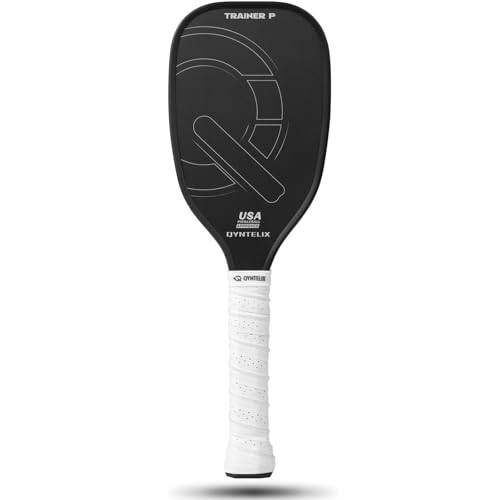
- Textured carbon fiber face for spin and control.
- 16mm core mimics a standard paddle feel.
- Elongated handle supports cleaner practice reps.
Best For: Players focused on paddle-based precision drills and warmups.
Adjustable Rebound Wall
Dual-Sided Pickleball Practice Board

- Height-adjustable board targets accuracy and reaction work.
- Dual-sided PVC panel delivers consistent bounce feedback.
- Freestanding base suits indoor or outdoor solo drills.
Best For: Players wanting a steady rebound wall for repetition-heavy training.
Solo Spin Trainer
Portable Pickleball Training Equipment

- Interchangeable pickleball and tennis heads
- Auto-rebound setup for nonstop solo reps
- Adjustable 15°-75° panel for varied angles
Best For: Solo players working on topspin, backspin, and consistency
Wall Trainer

- Tethered official-size pickleball for realistic feel
- Swivel design supports smooth, tangle-free reps
- Mounts on indoor or outdoor walls
Best For: Compact solo practice in garages, patios, or driveways
Topspin Accelerator – Learn Topspin Fast
If you’re shopping for pickleball training aids that help you build real topspin, this tool is aimed squarely at improving paddle angle and wrist action. It’s designed to help recreational players turn flat shots into more controlled drives, dinks, volleys, and serves with repeatable practice.
Best For: Recreational players who want to learn topspin quickly and practice at home or anywhere else.
Pros:
- Teaches the paddle angle and wrist action needed to create topspin.
- Supports practice for forehands, backhands, volleys, dinks, and serves.
- Works anywhere, including at home, in a garage, or while watching videos.
- Adjustable for adults and kids, with no batteries required.
Cons:
- Focused on spin mechanics rather than overall shot variety.
- Manual training aid, so it won’t feed balls automatically.
- Best results depend on consistent practice and repetition.
For players who want a simple way to rehearse topspin fundamentals, this is a practical training aid with a clear focus. It’s especially appealing if you want more confidence attacking the ball without spraying shots wide.
Spin Launcher – Adjustable Auto Training
Among pickleball training aids, an automatic launcher is a strong option if you want repetitive feeds with adjustable spin, speed, and angle. This model is built to challenge beginners and advanced players with auto-swing training for dinks, chops, volleys, and returns.
Best For: Players who want automatic, repeatable ball feeds for solo drilling and shot-specific practice.
Pros:
- Adjustable speed, elevation, and angles for different drills.
- Multiple spin options help you practice returning left and right spin.
- Launches a ball every 4 seconds for continuous practice.
- Holds up to 19 balls and offers battery, adapter, or power bank use.
Cons:
- Bulkier and more complex than simple manual training tools.
- Requires power management, depending on where you train.
- May be more machine than casual players need for light practice.
If your goal is structured repetition with less downtime, this launcher gives you a lot of control over how each feed arrives. It’s a versatile pick for players who want to work on specific reactions and shot types without needing a practice partner.
Match Buddy Rebounder – Solo Practice Tool
If you’re comparing pickleball training aids for solo work, this rebounder is built for continuous hitting with a pickleball-specific design. It’s meant to help you repeat serves, dinks, resets, and other fundamentals without needing a partner.
Best For: Adults and kids who want a compact self-practice tool for repeat hitting and skill building.
Pros:
- Designed specifically to fit a pickleball, unlike tennis rebounders.
- Supports over 100 consecutive hits with a little practice.
- Adjustable string length lets you change power and drill difficulty.
- Useful for serves, dinks, resets, sweet spot accuracy, and footwork.
Cons:
- Offers a narrower training experience than larger rebound systems.
- Best for repetitive fundamentals rather than full court-style drills.
- 30-day warranty is shorter than some alternatives.
This is a straightforward option if you want a compact tool for frequent solo reps. It’s especially appealing for players who care about touch, hand-eye coordination, and consistency more than full-size training equipment.
Kitchen Control Rebound Net – Precision Practice
For players shopping pickleball training aids that emphasize control and reaction training, this rebound net focuses on realistic returns and precision work. It’s made for garage, driveway, or backyard sessions when you want a solo setup that supports targeting and kitchen-zone awareness.
Best For: Players who want a larger rebound net for solo precision drills and game-like practice.
Pros:
- Game-like rebound is designed to mimic match conditions.
- Adjustable target line, net height indicator, and marked kitchen zone support precision.
- Foldable frame and quick-lock setup make it easier to use and store.
- Works well for solo practice in a garage, driveway, or backyard.
Cons:
- At 6 ft x 6 ft, it takes more space than smaller training aids.
- Heavier metal construction may be less portable than compact tools.
- Focuses on rebound drills rather than automatic ball feeding.
This rebound net is a solid pick if you want a more realistic hitting target and clearer feedback on placement. It suits players who want to sharpen dinks, volleys, and control with a bigger practice setup.
Precision Sweet-Spot Trainer – Carbon Fiber Pickleball Training Paddle
If you want pickleball training aids that help sharpen contact quality, this training paddle is built to force cleaner, more precise swings. Its textured carbon fiber face, 16mm honeycomb core, and elongated handle are designed to mimic the feel of a standard paddle while focusing reps on the sweet spot.
Best For: Players who want a paddle-style trainer for warmups, precision drills, and solo practice.
Pros:
- T700 raw carbon fiber with particle paint texture for spin and control work.
- 16mm polypropylene honeycomb core gives a familiar weight and reduced vibration.
- Elongated handle helps align training with a regular paddle swing path.
- USAPA approved for competitive training standards.
Cons:
- Single-purpose trainer, so it is less versatile than net or rebound systems.
- Best suited to skill work rather than casual match play.
This is a strong option if your main goal is repeatable technique work with a paddle that still feels close to court equipment. It makes the most sense for players who want structured practice before competition or during focused drill sessions.
Portable Court-Style Drills – Mini Rebounder Net with Kitchen Lines
This is one of the more versatile pickleball training aids for players who want solo drills with a realistic court reference. The 2-in-1 setup combines a mini pickleball net with a rebounder, plus marked kitchen lines and target zones to support dinks, volleys, drives, and accuracy work.
Best For: Solo players, families, and backyard trainers who want a portable all-in-one drill station.
Pros:
- 2-in-1 design combines a mini net and rebounder practice surface.
- Marked kitchen zone lines help with dink and control drills.
- Strategic targets support accuracy practice for volleys, drops, and topspins.
- Portable setup includes a carry bag for indoor or outdoor use.
Cons:
- At 6 ft wide, it is a training tool rather than a full-size court net.
- Best for structured practice, not regulation match play.
If you need a compact way to practice anywhere, this system covers a lot of ground without taking up much space. It is a practical pick for players who want repeatable solo reps and a setup that can double as a fun training game.
Adjustable Rebound Wall – Dual-Sided Pickleball Practice Board
For players comparing pickleball training aids that emphasize repetition and response speed, this freestanding practice board offers a simple wall-style solution. The height-adjustable design, dual-sided PVC panel, and stable base are aimed at consistent bounces for volleys, dinks, and baseline work indoors or outdoors.
Best For: Players who want a portable rebound wall for precise solo drills and reaction training.
Pros:
- Height-adjustable setup lets you tailor drill height for accuracy work.
- Dual-sided high-density PVC panel provides consistent bounce feedback.
- Freestanding base is designed for backyard, court, or garage use.
- Built for multi-angle training to improve reflexes and shot precision.
Cons:
- Requires floor space and a stable setup area.
- Single training station, so it is less flexible than net-based systems.
This is a smart pick if you want a rebound-style trainer that stays in place and delivers repeatable feedback. It is especially useful for players who want efficient solo practice without needing a partner.
Solo Spin Trainer – Portable Pickleball Training Equipment
If you want pickleball training aids that let you work on mechanics without needing a partner, this solo topspin trainer is built for repeated reps. Its adjustable 15°-75° panel, interchangeable pickleball and tennis heads, and auto-rebound setup are aimed at serving, volleys, baseline rallies, and no-volley zone defense.
Best For: Players who want a portable solo trainer for working on topspin, backspin, and repeatable shot mechanics at home or on court.
Pros:
- Interchangeable heads support both pickleball and tennis practice.
- Auto-rebound design is made for nonstop solo training with over 90% return accuracy.
- Adjustable panel helps recreate different swing trajectories and shot angles.
- Foldable tripod base makes it usable indoors or outdoors.
Cons:
- Designed for solo drills, not full match play.
- Premium, metal-built setup may be bulkier than simpler practice tools.
This is a focused training tool for players who want structured repetition and feedback from their practice time. If your goal is to sharpen spin and consistency with a portable rebounder, it offers a practical way to build muscle memory over multiple sessions.
Wall Trainer – Real Ball Tether Trainer
This wall-mounted option is a simple pick for pickleball training aids when you want quick solo reps in tight spaces. The tethered official-size pickleball gives you authentic bounce and spin, while the swivel design is meant to keep rallies smooth and tangle-free for indoor or outdoor practice.
Best For: Players who want a compact wall trainer for garage, driveway, patio, or yard sessions.
Pros:
- Works anywhere you can mount it, including indoor and outdoor walls.
- Official-size tethered ball adds a more realistic practice feel.
- Friction-free swivel is designed for continuous rebound play.
- Compatible with any pickleball paddle, which is not included.
Cons:
- No paddle is included, so you need your own equipment.
- Requires wall mounting, which may limit placement options.
For players who want a no-frills solo drill station, this trainer keeps the setup small and the repetition high. It is especially practical if you care more about timing, reaction speed, and consistency than having a full net or larger frame.
2-in-1 Rebounder – Practice Net With Pro Paddles
Among pickleball training aids, this 2-in-1 rebounder stands out because it combines solo drill space with a mini net for casual games. The upper half unfolds into a 5.8 x 2.7 ft rebound zone for dinks, volleys, forehands, and backhands, while the folded configuration becomes a 34-inch-high mini net for quick competitive play.
Best For: Families, beginners, or players who want both practice drills and small-space games in one setup.
Pros:
- 2-in-1 design switches between rebound mode and mini net play.
- Includes two paddles, two balls, a storage bag, straps, and spare parts.
- Foldable, collapsible frame is built for easy storage and transport.
- Instant-assembly design is meant to simplify setup.
Cons:
- Heavier and less compact than smaller solo trainers.
- May be more setup than needed if you only want basic wall drills.
This is a versatile choice if you want training value plus a way to turn driveways, garages, or backyards into a small game space. It makes the most sense for buyers who want a shared practice solution instead of a single-purpose rebound tool.
How We Picked These Pickleball Training Aids
We focused on tools that make practice more productive, not just more convenient. The best options support repeatable drills, realistic ball response, manageable setup, and enough durability for regular use. We also looked for equipment that suits different skill levels, since a beginner working on soft hands has different needs than an advanced player refining topspin or speed.
Because the category is broad, the strongest picks span multiple training styles: solo rebound systems, ball launchers, rebound boards, net-based trainers, and skill-specific aids for spin and stroke mechanics.
Quick Comparison
If you want the fastest path to more reps, choose a rebound net or launcher. If you want to improve spin and stroke mechanics, a specialty topspin trainer or practice paddle may be a better fit. For compact spaces, wall-mounted or portable solo tools are often the easiest to store and use. For players who want a more all-around session, net systems with marked target zones can help with dinks, volleys, and drive control in one setup.
Key Buying Factors for Pickleball Training Aids
Training Goal
Start with the skill you want to improve most. Dink control, topspin, serve placement, hand speed, and third-shot consistency all benefit from different equipment. Pickleball Training Aids work best when they match a specific weakness.
Ball Return and Realism
Rebound angle, launch consistency, and net tension affect how closely practice mimics live play. A more realistic return helps you groove timing, but very direct rebounds can be useful for reaction drills.
Space and Portability
Measure your practice area before buying. Some tools need only a wall or small floor space, while others require more room for safe returns. Portable designs are ideal for driveways, garages, and travel.
Setup Time and Durability
If you plan to train often, prioritize stable frames, simple assembly, and materials that hold up outdoors. A tool that is easy to deploy is more likely to get used consistently.
Skill Level and Versatility
Beginners usually benefit from straightforward, forgiving designs. Intermediate and advanced players may want adjustable angles, target zones, or more specialized aids that push precision and spin development.
Who Should Buy Which Pickleball Training Aids?
Choose a rebounder or solo net if you want the most versatile practice option. Choose a launcher if you want structured repetition for speed, volleys, and reaction training. Choose a topspin trainer if your main goal is improving stroke mechanics and rotation. Choose a practice paddle or compact board if you want a simple, affordable way to sharpen feel and contact. The best Pickleball Training Aids are the ones you will actually use regularly, so match the tool to your routine, your space, and your biggest technical need.