The best fitness trackers make it easier to understand your activity, sleep, workouts, and recovery without turning every goal into a complicated training plan.
Our 2026 roundup includes polished options from Garmin, Fitbit, Samsung, and WHOOP, along with affordable trackers, smartwatches, and a discreet smart ring. Use the guide below to narrow your choice by features, comfort, compatibility, and ongoing costs.
Best 10 Fitness Trackers Picks for 2026
Best Overall

- Up to 11 days of smartwatch battery life
- Built-in GPS with 30+ sports apps
- Advanced sleep, recovery, and Body Battery insights
Best For: Users wanting comprehensive fitness and health tracking
Best Connected Tracker

- Built-in GPS and 40+ exercise modes
- Google Maps, Wallet, and YouTube Music controls
- Up to 7 days of battery life
Best For: Users who want fitness tracking with Google conveniences
Best Battery Life

- Up to 14 days of battery life
- Large 1.6-inch AMOLED display
- 101+ workout modes with auto detection
Best For: Android users prioritizing battery life and display size
Best Simple Option

- Basic use does not require an app or phone
- Tracks steps, sleep, heart rate, and nine sports modes
- Five to seven days of battery life
Best For: Users wanting simple everyday activity tracking
Best Everyday Tracker

- Tracks activity, sleep, stress, and heart rate
- Up to 10 days of battery life
- Water resistant to 50 meters
Best For: Everyday wellness and sleep tracking
Best for Recovery Insights
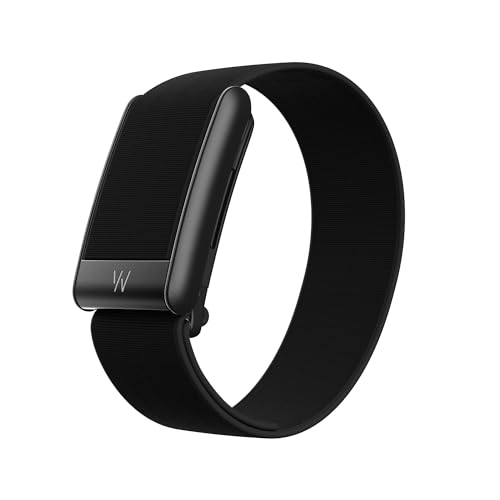
- Personalized Sleep, Strain, and Recovery insights
- Screenless design with 14-plus-day battery life
- Includes a 12-month membership
Best For: Training, recovery, and performance coaching
Best Budget Smartwatch Features
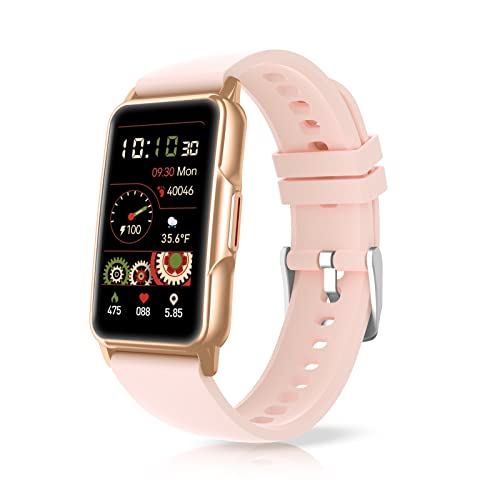
- Offers 115-plus sports modes
- Large 1.47-inch color touchscreen
- Up to 10–12 days of typical battery life
Best For: Workout variety, notifications, and daily tracking
Subscription-Free Pick
BIEMHA Smart Ring Fitness Tracker

- Tracks sleep, activity, and heart rate
- No app subscription required
- IP68 waterproof design
Best For: Discreet, subscription-free wellness tracking
Everyday Display Pick

- 1.10-inch AMOLED touchscreen
- 25 sports modes with connected GPS
- Up to seven days of battery life
Best For: Daily activity tracking with notifications
Long-Battery Sports Pick
Zeacool 123-Mode Fitness Tracker
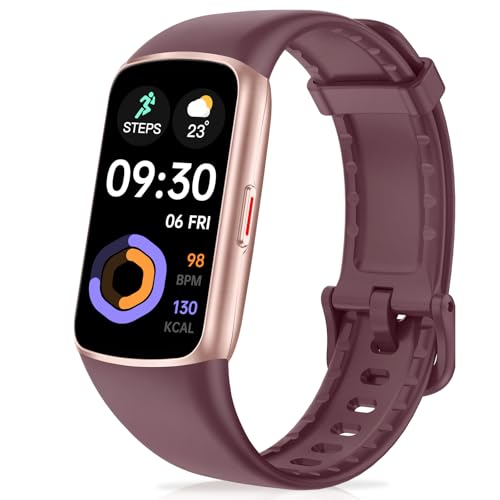
- 123 sports modes
- 10–14 days of regular-use battery
- AMOLED display with sleep scoring
Best For: Multi-sport tracking with extended battery life
Best Overall – Garmin vívoactive 5
The Garmin vívoactive 5 is a well-rounded choice among fitness trackers for users who want detailed health insights, built-in GPS, extensive workout support, and a bright AMOLED display. Its up-to-11-day smartwatch battery life and training tools make it practical for regular, varied activity.
Best For: Fitness-focused users who want advanced health, recovery, and workout features in a GPS smartwatch.
Pros:
- Bright AMOLED display and up to 11 days of battery life in smartwatch mode.
- Built-in GPS and more than 30 indoor and outdoor sports apps.
- Detailed sleep, stress, Body Battery, recovery, and training insights.
- Supports wheelchair activity tracking and phone-free music downloads.
Cons:
- Its broad feature set may be more than casual step trackers need.
- Some health metrics are estimates rather than medical measurements.
Choose the vívoactive 5 if you want a fitness tracker that can also serve as a capable training and everyday smartwatch. It stands out for combining long battery life with GPS, recovery guidance, and versatile activity tracking.
Best Connected Tracker – Fitbit Charge 6
The Fitbit Charge 6 is one of the more connected fitness trackers, pairing activity and sleep monitoring with built-in GPS, Google Maps directions, Google Wallet, and YouTube Music controls. It is a strong fit for users who want useful health metrics in a compact tracker format.
Best For: Everyday exercisers who value Google services, sleep tracking, and broad activity monitoring.
Pros:
- Tracks 40+ exercise modes, activity, heart rate, sleep, and Daily Readiness.
- Built-in GPS and real-time heart-rate linking with compatible exercise machines.
- Includes Google Maps turn-by-turn directions and Google Wallet contactless payments.
- Rated for up to seven days of battery life.
Cons:
- Some coaching features require a separately sold Google Health Premium membership.
- Compatibility requires relatively recent Android or iOS versions.
The Charge 6 is a practical middle ground between a basic activity band and a feature-rich smartwatch. Its Google integrations are particularly useful for runners, walkers, and anyone who wants navigation and payments on the wrist.
Best Battery Life – Samsung Galaxy Fit3
The Samsung Galaxy Fit3 is a slim fitness tracker with a large 1.6-inch AMOLED display, more than 100 workout modes, and a battery rated for up to 14 days. Its IP68 and 5ATM water resistance make it suitable for active routines, though its Android-only compatibility is important to note.
Best For: Android users seeking a bright display, long battery life, and straightforward workout tracking.
Pros:
- Large 1.6-inch AMOLED touchscreen with more than 100 watch faces.
- Up to 14 days of battery life from its 208mAh battery.
- Offers 101+ workout modes with automatic detection.
- Includes sleep coaching, blood oxygen, heart-rate, and snore tracking.
Cons:
- Compatible with Android devices only and not with iPhone or iOS.
- No built-in GPS, so it is not ideal for phone-free route tracking.
- The supplied notes specify no U.S. warranty and a generic fast charger.
The Galaxy Fit3 makes sense for Android owners who prioritize battery life and a spacious screen over standalone GPS. Confirm phone compatibility and warranty expectations before buying this international model.
Best Simple Option – LIVIKEY Fitness Tracker Watch
This LIVIKEY fitness tracker is designed for straightforward daily monitoring, with no app or phone required for basic use. It tracks steps, calories, distance, heart rate, sleep, and several sports modes, while offering up to seven days of battery life for routine activity tracking.
Best For: Users who want a simple fitness tracker for basic activity and sleep monitoring without smartphone setup.
Pros:
- Basic tracking can be used without an app or phone connection.
- Monitors steps, calories, distance, active time, heart rate, and sleep.
- Includes nine sport modes, sedentary reminders, alarms, and breathing guidance.
- Offers five to seven days of use and an IP68 waterproof rating for everyday wear.
Cons:
- No built-in GPS.
- It cannot make calls or send texts.
- Notifications and some settings require a compatible Android or iOS smartphone.
This tracker is best viewed as a no-frills option for steps, sleep, and basic wellness reminders rather than a full smartwatch. It is appealing when simplicity matters more than GPS, advanced training tools, or extensive connected features.
Best Everyday Tracker – Fitbit Inspire 3
For shoppers comparing fitness trackers, the Fitbit Inspire 3 is a compact option focused on everyday activity, sleep, stress, and heart-rate insights. It supports more than 40 exercise modes, automatic exercise tracking, and up to 10 days of battery life.
Best For: Everyday wellness tracking, sleep monitoring, and users who want a lightweight Fitbit compatible with iPhone and Android.
Pros:
- Tracks activity, heart rate, sleep, stress, blood oxygen, and menstrual health.
- Includes Daily Readiness Score, Active Zone Minutes, and automatic exercise tracking.
- Water resistant to 50 meters with up to 10 days of battery life.
- Small, lightweight design includes both small and large bands.
Cons:
- GPS requires a connected smartphone rather than built-in GPS.
- Its 0.76-inch display is relatively small for on-device viewing.
- Some wellness features may require the Fitbit app or membership-related access.
The Inspire 3 is a sensible pick for people who want broad wellness tracking in a discreet band. Its smartphone-connected GPS and small screen are trade-offs, but the long battery life and sleep-focused features make it practical for continuous wear.
Best for Recovery Insights – WHOOP 5.0
Among fitness trackers, WHOOP 5.0 stands out for its screenless, coaching-focused approach. The package includes a 12-month membership, continuous health measurements, personalized Sleep, Strain, and Recovery insights, and up to 14 or more days of battery life.
Best For: Athletes and performance-minded users who prefer detailed recovery coaching over a screen, notifications, or traditional smartwatch features.
Pros:
- Provides personalized Sleep, Strain, Recovery, VO2 max, stress, and menstrual-cycle insights.
- Tracks heart rate continuously and monitors baseline heart rate, blood oxygen, and skin temperature.
- WHOOP AI uses more than 140 metrics to tailor sleep and training guidance.
- Screenless design avoids buzzing notifications and offers up to 14-plus days of battery life.
Cons:
- The device has no screen for viewing information directly on the band.
- The package centers on a 12-month membership, creating an ongoing subscription commitment.
- It is designed around smartphones, tablets, and the WHOOP app rather than standalone watch functions.
WHOOP 5.0 is best understood as a wearable coaching system rather than a conventional fitness watch. If you want actionable recovery and training guidance and do not need a display, its continuous monitoring and adaptive recommendations are compelling.
Best Budget Smartwatch Features – 115-Sport Fitness Smartwatch
This fitness tracker combines a large color touchscreen with broad activity tracking and smartwatch conveniences. It offers more than 115 sports modes, all-day steps and calorie tracking, phone notifications, sleep monitoring, and phone-connected GPS route mapping.
Best For: Shoppers who want many workout modes, an easy-to-read display, and everyday notification features in an Android- and iPhone-compatible watch.
Pros:
- Supports more than 115 sports modes and tracks steps, distance, and calories.
- Includes 24/7 heart rate, blood oxygen, blood pressure, and sleep monitoring.
- Displays calls and messages, with additional tools such as weather, music control, and camera control.
- Offers a 1.47-inch color touchscreen, IP68 water resistance, and up to 10–12 days of typical battery life.
Cons:
- GPS depends on connection to the phone rather than built-in GPS.
- Health readings are wellness features and should not be treated as medical diagnoses.
- The supplied compatibility range and feature set may vary by phone and app support.
This model is a versatile choice when a readable screen and smartwatch-style functions matter as much as fitness tracking. Its phone-connected GPS and app dependence are worth considering, but the large sports-mode selection and long stated battery life add everyday convenience.
Subscription-Free Pick – BIEMHA Smart Ring Fitness Tracker
The BIEMHA Smart Ring is a discreet option for shoppers who want fitness trackers without a watch-style screen or app subscription. It monitors sleep, activity, steps, calories, and heart rate, while its water resistance supports everyday wear and workouts.
Best For: Users seeking a compact, subscription-free fitness tracker for sleep and daily activity monitoring.
Pros:
- Tracks sleep, steps, calories, exercise performance, and heart rate.
- No ongoing app subscription is required.
- IP68-rated waterproof design supports rain, workouts, and swimming.
- Charging case can extend use beyond five days.
Cons:
- Finger circumference and ring size should be checked carefully before ordering.
- The ring itself has no display for viewing metrics.
- Listed battery details vary between two to three days and over five days with the charging case.
Choose this model if a low-profile wearable and no-subscription tracking matter more than on-device notifications or a watch display. Verify sizing before purchase for the best fit.
Everyday Display Pick – AMOLED Fitness Tracker Watch
This fitness tracker watch combines a bright 1.10-inch AMOLED touchscreen with all-day activity, sleep, and heart-rate tracking. Its 25 sports modes, connected GPS support, notifications, and practical reminders make it suited to everyday health and workout routines.
Best For: Anyone wanting an affordable fitness tracker with a clear display, multi-sport tracking, and smart notifications.
Pros:
- Offers 24/7 heart-rate tracking and sleep-stage monitoring through the Keep Heath app.
- Includes 25 sports modes and connected GPS for workout route recording.
- Displays calls, messages, and social-media notifications.
- Provides up to seven days of battery life and IP68 water resistance.
Cons:
- Health and sleep data are for reference and do not replace medical advice.
- Connected GPS requires a compatible phone connection.
- No warranty is listed in the supplied details.
This is a practical choice for shoppers who want more than basic step counting, especially if a readable color screen and phone alerts are priorities. Its feature set is broad without requiring a larger sports-focused watch.
Long-Battery Sports Pick – Zeacool 123-Mode Fitness Tracker
The Zeacool FT55 stands out among fitness trackers for its extensive selection of 123 sports modes and claimed 10-to-14-day regular-use battery life. It also combines heart-rate, blood-oxygen, temperature, sleep, activity, and convenience features in a larger 1.47-inch AMOLED display.
Best For: Active users who want many workout profiles, extended battery life, and broad wellness tracking.
Pros:
- Supports 123 sports modes and records steps, distance, and calories in the Da Fit app.
- Tracks heart rate, blood oxygen, temperature, and sleep stages with a sleep score.
- Claims 10 to 14 days of regular use and up to 30 days on standby.
- IP68 water and dust resistance supports bathing, swimming, and everyday exposure.
Cons:
- Requires the Da Fit app and a compatible iPhone or Android smartphone for app-based data.
- The extensive health metrics should be treated as wellness information rather than medical diagnosis.
- Its larger 1.47-inch format may be less discreet than a ring-style tracker.
Consider the Zeacool if battery endurance and sport selection are your main buying criteria. It is especially appealing for users who want detailed app-based activity and sleep summaries without frequent charging.
How We Picked the Best Fitness Trackers
We evaluated these Fitness Trackers across the features that matter most in daily use: activity and step tracking, heart-rate monitoring, sleep insights, exercise modes, water resistance, display quality, battery life, phone compatibility, and overall usability. We also considered the difference between full-featured smartwatches, lightweight bands, subscription-based wearables, and low-cost models.
Health metrics can vary by device and should not replace professional medical advice. Features such as blood oxygen, blood pressure estimates, and recovery scores are best treated as general wellness information unless a product is specifically cleared for medical use.
Quick Comparison
| Best For | Look For | Product Types |
|---|---|---|
| Workout variety | Built-in GPS, exercise modes, accurate heart-rate data | Garmin vívoactive 5, Fitbit Charge 6, WHOOP 5.0/MG |
| Long battery life | Multi-day or two-week battery claims | Samsung Galaxy Fit3 and selected budget trackers |
| Sleep and recovery | Overnight comfort, sleep stages, recovery coaching | WHOOP, Fitbit Inspire 3, smart ring options |
| Basic activity tracking | Steps, calories, heart rate, simple controls | Entry-level fitness bands and watches |
Key Buying Factors for Fitness Trackers
Tracking and Sensors
Prioritize the measurements you will actually use. GPS is valuable for runners and cyclists who want route and pace data without carrying a phone. Sleep tracking requires a comfortable design and dependable overnight battery. If you want recovery guidance, check whether advanced insights require a subscription.
Battery, Comfort, and Durability
A tracker is only useful when you wear it consistently. Compare claimed battery life with your preferred charging routine, then check weight, band adjustment, screen size, and water resistance. IP68 protection helps with dust and water exposure, but it does not automatically mean every device is suitable for swimming or diving.
Phone Compatibility and Costs
Confirm iPhone or Android support before buying. Some models offer more features when paired with a particular phone ecosystem, while others work broadly across platforms. Also check membership fees, replacement bands, charger availability, and whether key insights are locked behind an app subscription.
Who Should Buy Which Fitness Trackers?
Choose the Garmin vívoactive 5 if you want a capable GPS smartwatch with broad workout support and a more traditional watch experience. The Fitbit Charge 6 suits shoppers seeking a slim band with strong everyday wellness features, while the Inspire 3 is a simpler, lighter option for basic activity and sleep tracking.
The Samsung Galaxy Fit3 is a practical choice for long battery life and a bright AMOLED display, particularly for Android users. WHOOP is better suited to athletes focused on training load, sleep, and recovery coaching who are comfortable with a membership model. Budget smartwatches and basic trackers make sense when steps, heart rate, calories, and notifications matter more than advanced accuracy or polished software.
Consider a smart ring if you prefer a discreet, screen-free wearable and prioritize sleep and general wellness. Before purchasing any low-cost model, verify app reviews, return policies, data permissions, and the exact claims supported by the companion software.