Capturing clean baseball game film starts with the right tripod. For coaches and parents, height, stability, and smooth adjustment matter more than flashy extras.
This roundup of baseball video analysis tripods focuses on tall, sturdy models that help you frame the diamond, keep the camera steady, and simplify post-game review.
Best 10 Baseball Video Analysis Tripods Picks for 2026
Sky-High Outdoor Pick
16.4ft Heavy Duty Sports Video Tripod

- 16.4-foot max height for elevated game footage
- Sand cage and non-slip feet for outdoor grip
- Quick three-step assembly with carry bag
Best For: Tall, wind-resistant outdoor game filming
Flexible High-Angle Choice
90in Overhead Tripod with Monopod

- 90-inch height with 360-degree rotation
- Detachable monopod for added shooting options
- 10kg capacity with compact folded size
Best For: Coaches wanting flexible, travel-friendly angle control
Air-Cushioned Tall Stand

- 16-foot height for wide field coverage
- Air-cushioned lowering adds safety
- 1/4" and 3/8" threads for broad compatibility
Best For: Tall outdoor recording with safer lowering
Smooth Motion Pick

- Hydraulic fluid head for smoother panning
- 20 lb capacity with dual quick-release plates
- 1/4" and 3/8" screws for wide compatibility
Best For: Controlled panning and camera movement
Sky-High Field Stand
16.4' Extreme Tall Video Camera Sports Tripod

- Extends to 16.4 ft for elevated sports angles
- Double-braced metal legs add stability
- Includes 3 sandbags and 1/4"/3/8" adapters
Best For: High-angle sports recording from the sideline
Fluid Motion Sideline Tripod
NEEWER 74" Video Tripod with Fluid Head

- Fluid head gives smooth 360° pan and tilt
- Aluminum legs and spreader improve stability
- Quick-release plate supports tripod-to-gimbal swaps
Best For: Smooth sideline filming with controlled pans
Convertible Power Tripod
Victiv 80/85" Heavy Duty Camera Tripod
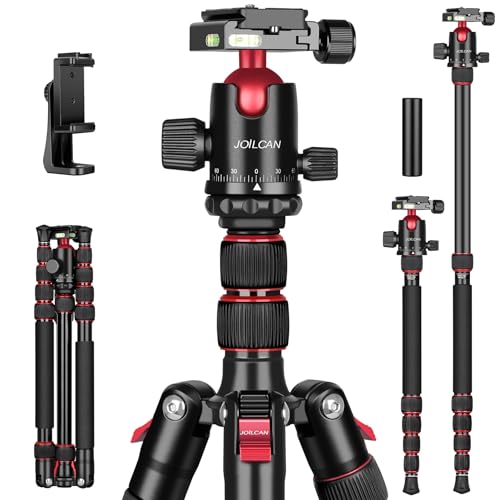
- Reaches 80" and up to 85" with extra tube
- Converts to a monopod for extra flexibility
- 35 lb load capacity with a lightweight frame
Best For: Tall, versatile support that can double as a monopod
Heavy-Duty Stability Pick
COMAN DV1000 74" Fluid Head Tripod

- 22.04 lb max load for heavier camera setups
- 60mm bowl base and mid-level spreaders improve stability
- Fluid head offers 360° pan and -75° to +90° tilt
Best For: Stable game-film recording and larger camera rigs
Balanced Sideline Option

- 17.6 lb load capacity suits most DSLR and camcorder setups
- Fluid drag head supports 360° pan and wide tilt range
- Includes carrying bag, detachable handle, and QR plate
Best For: Routine baseball filming with steady, controlled camera movement
Tallest Coverage Pick
NEEWER 79" Heavy Duty Video Tripod

- Extends to 78.7 inches for elevated viewing angles
- Fluid drag head provides 360° pan and -70° to 90° tilt
- Bowl base, bubble level, and rubber feet help stability
Best For: Tall sideline shots and elevated baseball viewing
Sky-High Outdoor Pick – 16.4ft Heavy Duty Sports Video Tripod
If you need a baseball video analysis tripod that can get the camera well above the field, this 16.4-foot stand is built for extreme height and outdoor stability. Its metal frame, sand cage grip, and non-slip feet are aimed at keeping shots steady on grass, dirt, or concrete, while the 1/4" adapter supports common cameras and accessories.
Best For: Tall, wind-resistant overhead filming at outdoor games.
Pros:
- Reaches 16.4 feet for elevated sideline or behind-the-plate views
- Sand cage and non-slip feet improve grip on outdoor surfaces
- Tool-free, three-step setup is beginner-friendly
- Includes a waterproof carry bag for transport and storage
Cons:
- Very tall size may be more than you need for lower-angle filming
- Not water resistant, so the stand itself still needs care in wet conditions
- Designed for stability outdoors, but it is still a large metal stand to move around
This is the pick for teams or coaches who want maximum elevation and a rugged setup for outdoor baseball video analysis. If height and wind resistance matter more than compact portability, it fits the job well.
Flexible High-Angle Choice – 90in Overhead Tripod with Monopod
For baseball video analysis tripods that need more framing flexibility than a basic stand, this K&F CONCEPT model offers an impressive 90-inch max height, 360-degree rotation, and adjustable leg angles. The detachable monopod and compact folded size make it a practical option when you want a travel-friendly tripod that still reaches overhead angles.
Best For: Coaches and creators who want flexible angles, smooth movement, and a lighter travel setup.
Pros:
- Reaches 90 inches for higher shooting positions
- 360-degree panoramic rotation supports smooth panning
- Detachable monopod adds flexibility in tight spaces
- 10kg load capacity handles a range of cameras and accessories
Cons:
- Much shorter than the tallest sports-specific tripods
- Not as specialized for extreme outdoor height as 16-foot stands
- Best for camera flexibility, not maximum sideline elevation
This tripod makes sense when you want a more versatile filming tool for baseball breakdown work, especially if you move between fields, travel often, or need varied shooting angles. It balances portability and control better than oversized sports stands.
Air-Cushioned Tall Stand – 16ft Sports Camera Tripod
This RAUBAY stand is a strong fit for baseball video analysis tripods when you need tall coverage without jumping to the tallest extreme-height model. It reaches 16 feet, uses an air-cushioned telescoping design for safer lowering, and includes both 1/4" and 3/8" screw threads for broad gear compatibility.
Best For: Tall outdoor recording with added safety and simple universal mounting.
Pros:
- 16-foot height is enough for broad field coverage
- Air-cushioned telescoping helps protect equipment and fingers
- 1/4" and 3/8" adapters improve compatibility
- Aluminum alloy construction supports stable use outdoors
Cons:
- 8.8 lb load limit is lower than some heavy-duty video tripods
- Bulky 8.6 lb build is not the most portable option
- No fluid head or advanced pan system is listed
For baseball coaches and analysts who want a tall, straightforward filming platform, this tripod covers the essentials well. Its air-cushioned lowering feature is a meaningful plus when you are adjusting gear frequently at the field.
Smooth Motion Pick – 74in Fluid Head Video Tripod
For baseball video analysis tripods focused on smoother tracking, this CAMBOFOTO model stands out with a hydraulic fluid head and 360-degree rotation. It reaches 74 inches, supports up to 20 pounds, and includes 1/4" and 3/8" screws plus two quick-release plates for flexible gear swaps.
Best For: Smooth panning and controlled camera movement during game breakdowns.
Pros:
- Fluid head delivers smoother horizontal movement
- 20 lb weight limit supports many camera setups
- Two quick-release plates speed up mounting changes
- Multifunction foot pads help on soft or uneven terrain
Cons:
- 74-inch max height is shorter than dedicated sports tower tripods
- Heavier build may be less convenient to move often
- Best for controlled motion, not maximum overhead reach
If your baseball workflow values smoother panning and easier camera handling over extreme height, this tripod is a strong fit. It is especially appealing for users who want a more traditional video tripod with sports-ready compatibility.
Sky-High Field Stand – 16.4' Extreme Tall Video Camera Sports Tripod
If you need baseball video analysis tripods that can clear fencing, dugouts, or crowded sidelines, this extra-tall stand is built for height first. It extends from 3.94 ft up to 16.4 ft, uses double-braced metal legs, and includes sandbags for added steadiness when you’re shooting elevated game footage outdoors.
Best For: Coaches and videographers who want a very tall sideline or field stand for elevated sports recording.
Pros:
- Reaches 16.4 ft for high-angle sports recording
- Metal build with double-braced legs for added stability
- Includes 3 sandbags to help manage heavier setups
- 1/4" and 3/8" threaded adapters support multiple devices
Cons:
- At 8 lb and 4.6 ft folded length, it is less portable than smaller tripods
- Not water resistant, so outdoor use still needs care
- Designed more like a tall stand than a compact travel tripod
This is a niche pick for situations where maximum height matters more than easy transport. For baseball film sessions that need a high vantage point, it offers the elevation and accessory support to make that setup practical.
Fluid Motion Sideline Tripod – NEEWER 74" Video Tripod with Fluid Head
For baseball video analysis tripods, this NEEWER model focuses on smooth handling and predictable framing. The fluid drag pan head supports 360° rotation and tilt movement, while the aluminum legs, mid-level spreader, and nonslip feet are aimed at keeping the setup steady during game-day shooting.
Best For: Coaches and creators who want smooth pan-and-tilt control for filming sports from the sideline.
Pros:
- Fluid drag pan head supports smooth 360° rotation and tilt
- Mid-level spreader and nonslip feet add stability
- Quick-release system switches between tripod and gimbal shooting
- 1/4" and 3/8" threads work with cameras and accessories
Cons:
- Max height of 74" is lower than extra-tall field stands
- 8 kg load limit may not suit heavier rigs
- Folded length is 36", so it is not the smallest travel option
This is a strong middle-ground choice if you care more about smooth video movement than extreme height. It fits sports, weddings, and general video work, but it is especially useful when you want clean sideline tracking.
Convertible Power Tripod – Victiv 80/85" Heavy Duty Camera Tripod
If you want baseball video analysis tripods that can do more than one job, this Victiv model stands out for its convertible design and high load rating. It extends to 80 inches, can reach 85 inches with the extra tube, and converts to a monopod, making it a flexible choice for field work, travel, and general video capture.
Best For: Users who want a tall, lightweight tripod that can also convert into a monopod.
Pros:
- Extends to 80" and up to 85" with the extra tube
- Converts into a monopod/alpenstock for added versatility
- 35 lb load capacity is strong for a lightweight 3.7 lb build
- 360° ball head and quick-release plate support flexible framing
Cons:
- Ball head is less specialized for smooth video panning than a fluid head
- At 18.5" minimum height, it is not ideal for ultra-low angles
- Fewer sections and convertibility can mean more setup choices to manage
This model is the most versatile of the three if you need one support that can cover multiple shooting styles. It is not the most video-specific head design, but the height, load capacity, and monopod conversion make it very practical.
Heavy-Duty Stability Pick – COMAN DV1000 74" Fluid Head Tripod
If you need a baseball video analysis tripod that stays planted while you pan the field, this COMAN model is built around stability and smooth movement. Its twin-tube aluminum construction, 60mm bowl base, and mid-level spreaders are aimed at keeping the setup steady, while the fluid head helps you follow action cleanly.
Best For: Coaches or videographers who want a tall, stable tripod for game film and sideline analysis.
Pros:
- Heavy-duty aluminum alloy dual-tube design with a 60mm bowl base for added stability
- Fluid head pans 360° and tilts from -75° to +90° for smooth tracking
- Supports up to 22.04 lbs, giving it the strongest load rating in this group
- Flip-lock legs and quick release plate make setup and camera swaps faster
Cons:
- At 35 inches folded, it is not the most compact option for travel
- Designed for camera and camcorder use, so it may be more tripod than casual users need
This is the most heavy-duty option here, and the higher load limit makes it a strong fit for larger rigs. If your priority is stable baseball video analysis rather than ultra-light portability, this is the most confidence-inspiring choice.
Balanced Sideline Option – RAUBAY DV-1 Pro Video Tripod
The RAUBAY DV-1 Pro is a practical baseball video analysis tripod if you want solid support without jumping to the heaviest build. Its twin-tube aluminum legs, upgraded mid-level spreader, and fluid drag head are designed to keep shots controlled during sideline filming.
Best For: Coaches and analysts who want a sturdy, mid-height tripod for routine baseball video work.
Pros:
- Aluminum twin-tube design with an upgraded mid-level spreader for stronger support
- Fluid drag head provides 360° pan and -75°/+90° tilt
- Supports up to 17.6 lbs, which is enough for most DSLR and camcorder setups
- Includes a carrying bag, detachable handle, and 75mm half ball adapter
Cons:
- Maximum height of 70.8 inches is lower than the tallest option in this group
- Folded size is listed at 70.87 inches in the supplied specs, which may be awkward for transport
This model lands in a useful middle ground: sturdy enough for consistent filming, but not overly specialized. For baseball video analysis where dependable movement matters more than extra height, it is an easy fit.
Tallest Coverage Pick – NEEWER 79" Heavy Duty Video Tripod
For baseball video analysis tripod shoppers who want maximum reach, this NEEWER stand extends to 79 inches and keeps the setup simple with flip locks and a fluid drag head. The aluminum double-tube build, bowl base, and rubber feet are all aimed at helping it stay secure on different surfaces.
Best For: Coaches who need a taller tripod for elevated viewing angles and outdoor field use.
Pros:
- Highest maximum height here at 200 cm / 78.7 inches
- Fluid head pans 360° and tilts -70° to 90° for flexible framing
- 70mm bowl base, bubble level, and rubber feet support stable setup
- Includes a large quick release plate with 1/4″ and 3/8″ screws for broad camera compatibility
Cons:
- Weight limit is 17.6 lb, which is lower than the strongest-rated option here
- At 35.8 inches folded, it is still a fairly large tripod to carry
If height is the main priority for filming baseball practices or games from a better vantage point, this NEEWER model stands out immediately. It offers the tallest setup in the group while still giving you the fluid movement needed for video analysis.
How We Picked the Best Baseball Video Analysis Tripods
We looked for Baseball Video Analysis Tripods that make it easier to film from the fence line, behind the backstop, or elevated sideline positions. Priority went to usable maximum height, stable leg construction, fluid or smooth heads, and practical load capacity for common camcorders, mirrorless cameras, and lightweight phone setups.
We also favored models with quick-release plates, common 1/4" and 3/8" mounting options, and portability that still works for field use. Extra-tall options can be helpful, but only if they remain rigid enough to avoid shake in wind or during quick pan adjustments.
Quick Comparison
In this category, the main tradeoff is height versus portability. Extra-tall stands are best for clearing crowds and capturing a full infield view, while mid-height video tripods are usually easier to carry, faster to set up, and better for travel tournaments. Fluid heads are especially useful if you want smoother tracking during pitching, baserunning, or coach-led drills.
Key Buying Factors for Baseball Video Analysis Tripods
Height and Viewing Angle
For baseball, taller is often better. A tripod that reaches above the fence or sideline traffic can deliver a cleaner angle on the pitcher, batter, and defensive alignment. Still, make sure the tripod remains stable at full extension.
Head Type and Movement
Fluid heads are usually the best fit for game film because they help produce smoother pans and tilts. If you plan to review mechanics, consistent movement matters more than fast repositioning.
Stability and Load Capacity
Look for strong legs, wider bases, and a load rating that comfortably exceeds your camera setup. Lightweight tripods may save space, but they can struggle in gusty conditions or on uneven dugout surfaces.
Mount Compatibility
Most Baseball Video Analysis Tripods should support standard camera threads and quick-release plates. That flexibility makes it easier to swap between cameras, phones, and accessories without slowing down practice or pregame setup.
Who Should Buy Which Baseball Video Analysis Tripods?
If you need maximum height for elevated game footage, choose an extra-tall tripod first. If you travel often and value speed, a more compact heavy-duty video tripod is usually the better fit. Coaches building a repeatable filming workflow should prioritize fluid head control, quick-release convenience, and stable construction over gimmicks.
Parents filming occasional games may do well with a simpler, lighter option that still offers enough height for a clear view. The best choice is the one that matches your field setup, camera weight, and how often you need to move between games, cages, and practice sessions.