Finding reliable baseball pitching machines for small spaces means balancing pitch consistency, setup size, safety, and storage. The right compact model can make backyard, garage, or indoor training more productive without requiring a full field.
This roundup compares 10 portable options across different skill levels, pitching styles, speeds, and budgets so you can choose a machine that fits your available space and practice goals.
Best 10 Baseball Pitching Machines for Small Spaces Picks for 2026
Best All-Around Option

- Automatic feeding for repeatable practice
- Fastball and curveball delivery
- 13-pound portable design
Best For: Versatile lite-ball hitting practice
Best Manual Value

- No electricity or batteries required
- Supports many ball types
- Handles hitting and fielding drills
Best For: Portable, multi-purpose practice
Best Angle Variety
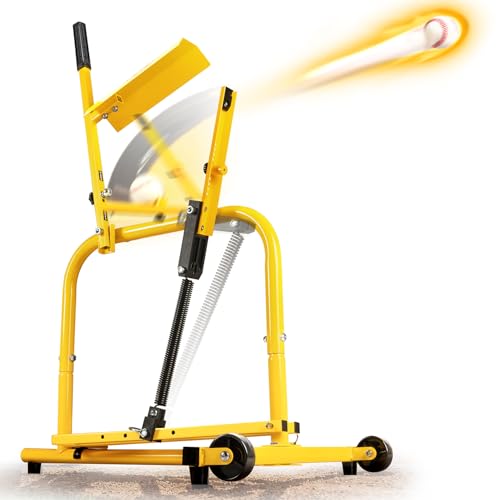
- 11 adjustable pitching angles
- Four speeds from 25 to 40 mph
- Manual steel design with transport wheels
Best For: Multi-drill backyard and field practice
Best Fielding Flexibility
Louisville Slugger Black Flame

- Throws regulation baseballs up to 50 mph
- Three-in-one hitting and fielding design
- Works without electricity or batteries
Best For: Portable batting and fielding practice
Compact Power Trainer
Heater Sports Junior Pitching Machine

- 15–48 MPH adjustable speed range
- 12-ball feeder pitches every 10 seconds
- Stable tripod stand with adjustable angle
Best For: Kids and families seeking adjustable backyard practice
Four-Skill Starter
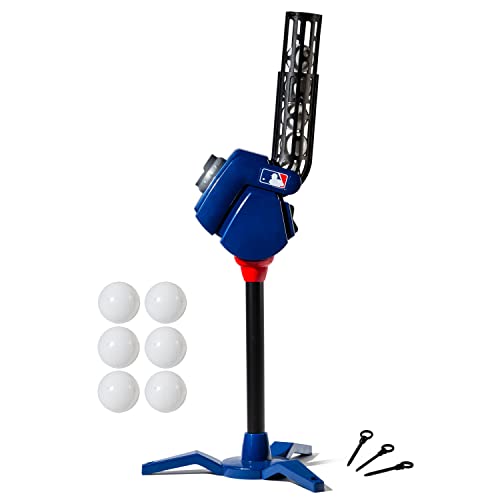
- Practices hitting and three fielding angles
- Weighs 5 pounds for easy handling
- Includes six plastic balls; holds up to nine
Best For: Young beginners practicing in limited indoor or outdoor space
Ultra-Light Beginner Pick
Furlihong 380BH Pitching Machine

- 2.1-pound compact design
- Three launch angles at 20 MPH
- Includes 20 balls and a plastic bat
Best For: Kids and beginners needing a lightweight, space-saving setup
Best Compact Starter

- 30 mph automatic soft-ball pitches
- Adjustable angle and portable design
- 26-ball capacity with five-second delay
Best For: Portable beginner batting practice in limited spaces
Best Complete Small-Space Kit

- Includes 60 five-inch training balls
- 18 mph pitching with adjustable height
- AC or C-battery operation
Best For: Family practice and flexible indoor or outdoor training
Best Real-Ball Versatility

- Real baseball pitches up to 45 mph
- Adjustable head for batting and fielding drills
- 12-ball feeder with one-year U.S. warranty
Best For: Versatile practice where a 46-foot setup is available
Best All-Around Option – Slider Lite 360
For shoppers comparing baseball pitching machines for small spaces, the Heater Sports Slider Lite 360 offers a compact training setup with automatic ball feeding and a 360-degree pivot head. It throws lite balls up to 80 mph from 46 feet and supports both fastball and curveball practice.
Best For: Hitters who want versatile fastball and curveball practice in a portable setup.
Pros:
- Automatic feeder supports repeatable practice.
- Pivot head delivers accurate curveballs and traditional fastballs.
- Tubular steel legs with rubber tips provide stability.
- Lightweight 13-pound design is easier to move and store.
Cons:
- Designed for lite balls rather than regulation baseballs.
- Its 36-inch dimensions may still require a dedicated storage spot.
The Slider Lite 360 is a strong choice when convenience and pitch variety matter most. Its automatic feeding and portable construction make it practical for repeated hitting sessions, while the 80-mph lite-ball capability gives developing players room to progress.
Best Manual Value – Louisville Slugger Blue Flame
The Louisville Slugger Blue Flame is a practical pick for baseball pitching machines for small spaces because it is manual, compact, and requires no electricity or batteries. Its adjustable controls support hard-ball, plastic-ball, and softball drills, while its lightweight frame is easy to move.
Best For: Families and coaches needing a versatile, power-free machine for multiple ball types.
Pros:
- Works with hard balls, softballs, dimple balls, plastic balls, and more.
- Throws hard balls from 18 to 45 mph and light-flight or plastic balls up to 60 mph.
- Can deliver level pitches, fly balls, and grounders.
- Weighs less than 25 pounds and needs no electricity.
Cons:
- Manual operation does not provide automatic feeding.
- The listed warranty is limited to 60 days against defects.
Choose the Blue Flame if flexible drills and simple setup are more important than automated repetition. Its broad ball compatibility and manual operation make it especially useful in backyards, small practice areas, and locations without power.
Best Angle Variety – Dual-Wheel Pitching Machine
For baseball pitching machines for small spaces, this dual-wheel model combines a steel frame with manual operation and built-in transport wheels. Four speed settings from 25 to 40 mph and 11 adjustable angles let players practice grounders, line drives, fly balls, and varied pitch trajectories.
Best For: Players and coaches who want adjustable fielding and hitting drills without needing an outlet.
Pros:
- Manual design works in a backyard, on a field, or while traveling.
- Four speed levels accommodate different skill levels.
- Eleven angles support grounder, line-drive, and fly-ball practice.
- Built-in wheels simplify movement between practice locations.
Cons:
- Its top listed speed is 40 mph, below faster training machines.
- Manual operation requires the user to reset or operate each pitch.
This machine stands out for drill flexibility rather than maximum velocity. Its compact package dimensions, power-free operation, and broad angle adjustment make it a useful choice when one machine needs to cover several practice formats.
Best Fielding Flexibility – Louisville Slugger Black Flame
The Louisville Slugger Black Flame is a versatile option among baseball pitching machines for small spaces, offering manual operation with no electricity or batteries. It throws regulation baseballs up to 50 mph, softballs up to 44 mph, and switches between strikes, fly balls, and grounders.
Best For: Youth and adult players who want one portable machine for batting and fielding practice.
Pros:
- Supports regulation baseballs, softballs, dimple balls, plastic, foam, and restricted-flight balls.
- Three adjustable speed and height settings suit different hitters.
- Three-in-one design covers strikes, fly balls, and ground balls.
- Assembles in under 10 minutes and anchors with front spikes.
Cons:
- Manual operation does not offer automatic ball feeding.
- The listed warranty is limited to 60 days against defects.
- At 22 pounds, it is less light than some compact alternatives.
The Black Flame is a strong fit when space, power access, and drill variety are all concerns. Its regulation-ball capability and fielding modes provide more realistic practice, while the manual design keeps setup flexible for backyards, parks, and fields.
Compact Power Trainer – Heater Sports Junior Pitching Machine
For shoppers comparing baseball pitching machines for small spaces, the Heater Sports Junior offers a portable setup with adjustable speed and angle controls. Its 12-ball feeder supports hands-free backyard practice, while the tripod stand helps keep the unit stable.
Best For: Kids and families wanting adjustable, repeatable batting practice in a backyard or other compact training area.
Pros:
- Variable speed range from 15 to 48 MPH.
- 12-ball automatic feeder delivers a ball every 10 seconds.
- Adjustable pitching angle supports varied practice.
- Heavy-duty tripod stand and enclosed air-filled tires provide stability and added safety.
Cons:
- At 23.5 pounds, it is heavier than the lightweight beginner models in this roundup.
- The listed machine dimensions are 38 by 38 by 38 inches, so storage space should be considered.
Choose this model if you want more speed flexibility and longer hands-free sessions than a basic kids’ pitching toy can provide, provided you have room for its larger footprint.
Four-Skill Starter – Franklin MLB Superstar 4-in-1
The Franklin MLB Superstar is a small, battery-operated option for shoppers seeking baseball pitching machines for small spaces. It handles hitting, soft toss, ground balls, and pop flies, making it a flexible training toy for young beginners.
Best For: Young beginner players who need a compact, simple machine for both batting and introductory fielding practice.
Pros:
- Adjustable angle supports soft toss, fast pitch, ground balls, and pop flies.
- Small 5-pound design is easy to position and store.
- Includes six compatible plastic balls, with a feeder capacity of up to nine.
- Battery operated with four C batteries.
Cons:
- Requires four C batteries, which are not included.
- Designed for kids and beginners rather than advanced pitching practice.
- Plastic construction may be less substantial than heavier-duty machines.
This is a practical pick when versatility and a small footprint matter more than high-speed pitching or advanced training features.
Ultra-Light Beginner Pick – Furlihong 380BH Pitching Machine
The Furlihong 380BH is a lightweight choice for baseball pitching machines for small spaces, weighing just 2.1 pounds. It uses sting-free plastic training balls, offers three launch angles, and runs on batteries for convenient outdoor practice.
Best For: Kids and beginner players who want an easy-to-store machine with gentle, consistent pitches.
Pros:
- Compact 21.3-by-9.9-by-9.5-inch machine weighs 2.1 pounds.
- Three launch angles accommodate different ages and skill levels.
- Includes 20 plastic training balls and a plastic bat.
- Battery powered and pitches at 20 MPH every seven seconds.
Cons:
- Must use Furlihong plastic training balls to avoid damage.
- The 20 MPH speed is intended for kids and beginners, not advanced hitters.
- Requires four D batteries.
With its low weight, included training set, and gentle pitch speed, the 380BH is especially convenient where storage and setup space are limited.
Best Compact Starter – SKLZ Lightning Bolt Pro
For shoppers comparing baseball pitching machines for small spaces, the SKLZ Lightning Bolt Pro is a lightweight practice option that automatically delivers soft balls at 30 mph. Its compact design and adjustable angle make it practical for repeat hitting drills at home or in limited practice areas.
Best For: Portable batting practice, beginners, and players who want simple repetition training.
Pros:
- Lightweight and portable for practice in many locations
- Automatic 30 mph soft-ball pitching with a five-second delay
- Adjustable angle supports different pitching locations
- Holds up to 26 balls for repeated drills
Cons:
- Uses soft practice balls rather than real baseballs
- The five-second delay may feel slow for advanced, fast-paced training
With its small footprint, easy portability, and straightforward operation, this SKLZ machine is a sensible choice when space and setup simplicity matter more than maximum speed.
Best Complete Small-Space Kit – Furlihong 692BH
The Furlihong 692BH is a convenient pick for baseball pitching machines for small spaces, especially when you want an all-in-one setup. It includes 60 training balls, runs from AC power or C batteries, and uses adjustable height and angle controls for indoor or outdoor practice.
Best For: Families and developing players who want a portable training kit with plenty of included balls.
Pros:
- Includes 60 training balls to start practicing immediately
- Portable design supports indoor and outdoor use
- Works with AC power or C batteries
- Top basket holds up to 40 balls for less frequent reloading
Cons:
- 18 mph speed may provide less challenge for advanced hitters
- Uses smaller five-inch-circumference training balls
- 180-day warranty is relatively limited
The compact, battery-capable design is well suited to flexible practice, while the included ball supply and large basket reduce setup interruptions in tighter training areas.
Best Real-Ball Versatility – Heater Sports Base Hit
Among baseball pitching machines for small spaces, the Heater Sports Base Hit stands out for delivering real baseball pitches up to 45 mph while remaining portable at 15 pounds. Its adjustable head supports batting, ground-ball, and pop-fly practice, though its recommended pitching distance and ball flight require more room than compact soft-ball machines.
Best For: Players with access to a larger backyard or training area who want more authentic, versatile drills.
Pros:
- Throws real baseball pitches at speeds up to 45 mph
- Adjustable head handles pitches, ground balls, and pop flies
- Includes a removable 12-ball automatic feeder
- Lightweight 15-pound design and one-year U.S. warranty
Cons:
- Requires a recommended 46-foot pitching distance
- Its ball-flight options may be impractical for very tight spaces
- Feeder releases one ball every eight seconds
This is the most capable option for varied baseball training, but it is better suited to a backyard or dedicated practice area than a very confined indoor space.
How We Picked the Best Baseball Pitching Machines for Small Spaces
We focused on machines that are practical where room is limited, giving priority to compact footprints, portability, straightforward setup, and adjustable pitching options. We also considered whether each model suits baseball, softball, youth training, or general batting practice. Speed control, pitch-angle adjustment, ball compatibility, feeding systems, and storage convenience were weighed alongside intended skill level.
Because a small practice area leaves less margin for error, safety-related usability matters too. Models that support repeatable delivery, controlled speeds, and predictable placement can be easier to use responsibly than machines designed primarily for high-performance field work.
Quick Comparison
| Best For | Look For |
|---|---|
| Young beginners | Low speed, simple controls, lightweight construction |
| Family practice | Adjustable angles, broad ball compatibility, easy storage |
| Advanced hitters | Dual-wheel designs, higher speeds, repeatable delivery |
| Very limited spaces | Compact dimensions, portable bases, short setup time |
Key Buying Factors for Small Spaces
Footprint and Storage
Measure both the operating area and where the machine will be stored. A machine may be compact when folded but still need several feet of clearance for loading, aiming, and safe ball travel. Portable handles, lighter weight, and removable feeders are useful when equipment must be moved frequently.
Speed and Adjustment Range
Choose a speed range that matches the hitter rather than buying solely for maximum velocity. Children and beginners generally benefit from slower, predictable pitches. Adjustable angles allow users to practice different trajectories, but they also require enough overhead and side clearance.
Ball Type and Feeding Method
Confirm whether the machine uses real baseballs, lightweight training balls, foam balls, or a specific included ball size. Automatic feeders reduce interruptions but need extra space and may add height or bulk. Manual loading can be preferable in very tight areas because it gives the operator more control.
Power, Noise, and Safety
Check whether the unit requires an outlet, batteries, or another power source. In garages and shared residential spaces, noise may be a deciding factor. Always use an appropriate protective screen, keep spectators behind the machine or outside the ball path, and follow the manufacturer’s distance and ball-use instructions.
Who Should Buy Which Baseball Pitching Machines for Small Spaces?
Parents introducing baseball at home should favor lightweight beginner machines with modest speeds and simple controls. Families wanting more versatility should consider adjustable models that accommodate multiple angles and practice styles. Experienced players may prefer dual-wheel or higher-speed machines, provided their space allows a longer safety zone and the machine’s output matches their training needs.
If storage is the main concern, prioritize the smallest practical footprint and a design that can be carried or packed away quickly. For frequent team or family sessions, an automatic feeder may justify its added size. The best choice is the machine that fits your real practice area, skill level, ball type, and safety setup—not simply the one with the highest listed speed.