The right fins can make swim workouts more productive by improving body position, reinforcing ankle movement, and adding useful resistance without overwhelming your kick.
We compared 10 training-focused options for triathletes, from short silicone blades for pool drills to longer fins for developing leg strength and endurance.
Best 10 Swim Fins for Triathlons Picks for 2026
Best for Power-Focused Training

- Short blade encourages a fast, powerful kick
- Left-right-specific open-heel design
- Silicone construction for intensive training comfort
Best For: Competitive swimmers improving kick power and underwater technique
Best for Quick Kick Cadence

- Promotes short, quick leg movements
- Thickened foot pockets improve comfort
- No-slip heel base and rounded edges
Best For: Triathletes practicing a faster, controlled kick
Best for Stable Propulsion
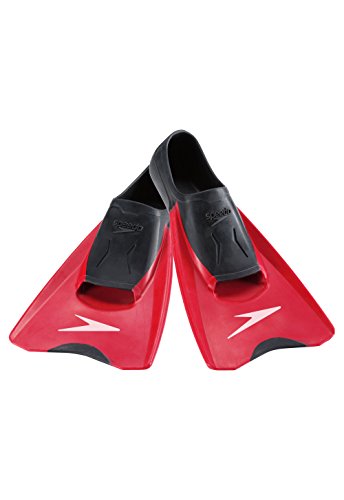
- 10-degree angled blade supports stability
- Promotes higher kick cadence
- Extended foot pocket targets comfort
Best For: Swimmers developing cadence and down-kick propulsion
Buoyant Alignment Trainer

- Buoyant design helps lift legs and reduce drag
- Supports propulsion and kick-feedback drills
- Floats in fresh and salt water
Best For: Adult swimmers focused on alignment and technique training
Strength and Flexibility Builder

- Long blade supports kick mechanics and conditioning
- Natural rubber construction for repeated training
- Eight color-coded sizes from XXXS to XXL
Best For: Pool athletes developing kick strength and foot flexibility
Speedo Training Pick

- Short blade supports a fast-beat kick
- Natural rubber construction
- Comfort-focused open-toe pocket
Best For: Strong fitness swimmers training kick frequency
Travel-Friendly Pick

- Short design helps reduce leg fatigue
- Travel size with mesh bag
- Flexible material and fin-sock compatibility
Best For: Beginners and travelers practicing flutter kicks
Arena Technique Pick
Lightweight Silicone Short Fins
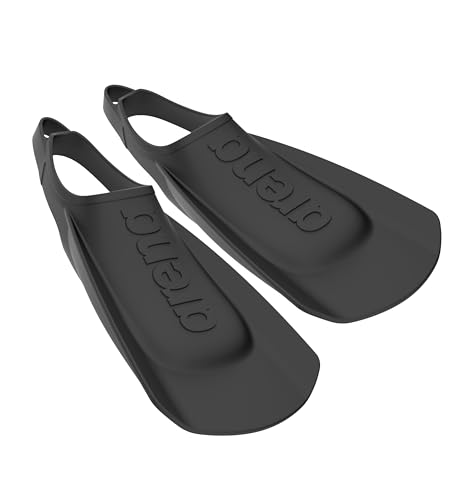
- Short blade encourages higher kick frequency
- Open heel allows freedom of movement
- Soft TPE construction helps reduce blisters
Best For: Fitness and competitive swimmers refining technique
Best for Power-Focused Training – Arena Powerfin Pro II
For triathletes looking for swim fins for triathlons that emphasize leg strength and underwater technique, the Arena Powerfin Pro II offers a short blade, hydrodynamic slits, and a left-right-specific fit. Its silicone construction is suited to intensive training.
Best For: Competitive swimmers and triathletes focused on improving kick power, ankle flexibility, and underwater movement.
Pros:
- Short blade supports a faster, more powerful kick.
- Sloping surface, hydrodynamic slits, and side grooves promote control.
- Left- and right-foot customization with an open heel supports ankle flexibility.
- Long-life silicone is designed for comfort and reduced blister risk.
Cons:
- The performance-focused design may be more specialized than a basic training fin.
- Correct sizing is important because the fit is customized by foot.
Choose this model if your training plan prioritizes a stronger, faster kick and more deliberate underwater work. Its short-blade design should appeal to experienced swimmers who want responsive technique practice.
Best for Quick Kick Cadence – TYR Burner 2.0
The TYR Burner 2.0 is a practical option among swim fins for triathlons when you want to reinforce short, quick leg and foot movements. Its natural-rubber build, thickened foot pockets, and rounded edges are designed for propulsion and comfort during technique work.
Best For: Adult swimmers and triathletes practicing a quicker kick with a full-foot-pocket fit.
Pros:
- Designed to promote short, quick leg and foot movements.
- Thickened foot pockets help reduce discomfort during use.
- Rounded edges and a no-slip heel base support stability.
- Available in a broad range of adult sizes.
Cons:
- Natural rubber may be less suitable for shoppers specifically seeking silicone fins.
- Sizing may require adjustment for wide, narrow, or in-between feet.
The Burner 2.0 makes sense for swimmers who want a straightforward training fin that supports cadence and stroke technique. Follow TYR’s sizing guidance carefully, especially if your foot width falls outside the typical range.
Best for Stable Propulsion – Speedo Switchblade
For swimmers comparing swim fins for triathlons, the Speedo Switchblade stands out for its 10-degree angled blade. This natural-rubber fin is designed to provide stability through the kick cycle while helping you raise kick cadence without giving up technique.
Best For: Swimmers seeking a stable, propulsion-oriented fin with an angled blade and extended foot pocket.
Pros:
- 10-degree blade angle supports stability and engagement.
- Angled blade emphasizes propulsion during the down kick.
- Designed to increase kick cadence while maintaining technique.
- Extended foot pocket is intended for added comfort.
Cons:
- The specialized angled blade may feel different from a conventional fin.
- Natural-rubber construction is not ideal if you specifically prefer silicone.
The Switchblade is a compelling training choice when stability and down-kick propulsion matter more than a traditional blade feel. It is especially suited to structured drills aimed at improving cadence and engagement.
Best for Natural Flutter-Kick Practice – TYR Stryker Silicone Fins
The TYR Stryker is a useful choice for swim fins for triathlons when you want short-blade assistance without losing a natural flutter-kick rhythm. Its hypoallergenic silicone construction, comfort fit, and non-slip footpad suit pool training and movement around wet surfaces.
Best For: Triathletes and swimmers building a natural, short-and-quick flutter kick with silicone fins.
Pros:
- Short blade encourages natural flutter-kick movement.
- Hypoallergenic silicone construction and comfort fit support regular training.
- Non-slip footpad improves traction around pools, docks, and boats.
- Built-in sun protection helps prevent color fading.
Cons:
- The listed medium size fits only men’s 6-7 and women’s 7.5-8.5 shoe sizes.
- Short-blade design may provide less leverage than a longer training fin.
The Stryker is a sensible fit for swimmers who value a comfortable silicone fin and a close approximation of a natural flutter kick. Verify the available size carefully before ordering.
Buoyant Alignment Trainer – FINIS Long Floating Swim Fins
For swimmers comparing swim fins for triathlons, the FINIS Long Floating Swim Fins emphasize buoyancy, propulsion, and body alignment. Their long rubber design helps lift the legs toward the water’s surface, which may make technique-focused pool training more manageable.
Best For: Adult swimmers who want buoyant fins for alignment work, kick feedback, and general training in fresh or salt water.
Pros:
- Buoyancy helps lift the legs and reduce drag.
- Provides forward propulsion and feedback for elongating the kick.
- Designed for swimmers across different ability levels.
- Floats in both fresh and salt water.
Cons:
- The long-fin design may be less convenient for compact, race-specific training.
- Pull-on closure offers no adjustable fastening.
Choose these fins when improving body position is a priority. They are especially practical for technique sessions where extra buoyancy and a clear sense of kick mechanics are useful.
Strength and Flexibility Builder – TYR Flexfins 2.0
Among swim fins for triathlons, TYR Flexfins 2.0 are aimed at structured pool training rather than minimal race-day gear. Their long natural-rubber blades support kick sets, lower-body conditioning, and foot-flexibility work during repeated swim sessions.
Best For: Adult swimmers and triathletes building kick strength, practicing mechanics, and adding conditioning to regular pool workouts.
Pros:
- Long blade supports focused kick training.
- Helps develop lower-body strength and kick power.
- Designed to support foot flexibility through regular use.
- Color-coded sizing is available across eight sizes, from XXXS to XXL.
Cons:
- Long blades may feel less streamlined for swimmers seeking short-fins-style handling.
- Full-foot construction has no adjustable strap.
The Flexfins 2.0 make sense for athletes who want a dedicated training tool for kick development. Their broad size range also makes choosing a consistent fit easier for swimmers and coaches.
Streamlined Short-Fin Option – WSTOO Training Short Fins
For shoppers seeking swim fins for triathlons with a shorter, streamlined profile, WSTOO Training Short Fins combine silicone construction with a ribbed, fishtail-shaped blade. They are designed for controlled movement in swimming, snorkeling, and diving, with features intended to support comfort and traction.
Best For: Adults and youth who want versatile short fins for pool swimming, snorkeling, or diving and prefer a silicone foot pocket with a rear pull strap.
Pros:
- Streamlined, ribbed design is intended to reduce drag and support controlled movement.
- Silicone material is designed for a comfortable feel.
- Rear pull strap helps with putting the fins on.
- Anti-slip pattern and drainage ports help with traction and water or sand drainage.
Cons:
- Correct sizing requires measuring foot length rather than relying on regular shoe size.
- The supplied notes do not specify a dedicated triathlon-racing design.
- Fit is listed as regular rather than adjustable.
These fins are a versatile choice when you want a streamlined training option that can also handle snorkeling and diving. Pay particular attention to the sizing chart, since the manufacturer advises measuring the foot first.
Speedo Training Pick – Rubber Short-Blade Fins
For swimmers comparing swim fins for triathlons, the Speedo Unisex-Adult Swim Training Fins offer a short-blade design intended to support a fast-beat kick. Natural rubber construction and an open-toe foot pocket make them a practical option for pool-based fitness and technique work.
Best For: Strong fitness swimmers who want short fins for fast-beat kick training.
Pros:
- Short blade promotes a fast-beat kick.
- Natural rubber material.
- Open-toe foot pocket is engineered for comfort.
Cons:
- The short blade is designed for strong fitness swimmers, so it may be less suitable for beginners seeking maximum thrust.
- Regular fit may require careful size selection.
This is a focused training fin rather than a travel or snorkeling-oriented model. Its short blade and comfort-focused foot pocket suit swimmers working on kick frequency and fitness in the pool.
Travel-Friendly Pick – Adult & Kids Training Fins
These adult and kids swim training fins are a versatile choice for shoppers considering swim fins for triathlons, especially when easy pool practice and portability matter. Their short, flexible design is intended to reduce leg fatigue and comes with a mesh bag for travel.
Best For: Beginners, casual swimmers, and travelers practicing a flutter kick in the pool.
Pros:
- Short fins are designed to be easier on leg muscles.
- Travel-size design includes a mesh bag.
- Flexible material may help reduce cramps, while fin socks can add comfort.
- Available for adults and kids.
Cons:
- Short fins generate less thrust than longer fins.
- Plastic construction may offer less softness than silicone-style options.
- Regular fit may require attention to sizing to limit slipping or chafing.
Its emphasis is on approachable training, travel convenience, and flutter-kick practice rather than maximum propulsion. The included mesh bag and short profile are useful for swimmers who take equipment to the pool or on trips.
Arena Technique Pick – Lightweight Silicone Short Fins
The Arena Unisex Adult Training Fins are a strong option for swimmers evaluating swim fins for triathlons and prioritizing kick technique. Their lightweight short blade, open-heel construction, and hydrodynamic slits are designed to support kick frequency, push-offs, and forward motion.
Best For: Fitness and competitive swimmers developing a stronger, faster kick.
Pros:
- Short blade supports higher kick frequency and push-offs after turns.
- Open-heel construction allows freedom of movement.
- Soft TPE materials are designed to reduce the likelihood of blisters.
- Hydrodynamic slits and lightweight construction support technique work.
Cons:
- At 700 g, these are not the lightest option listed.
- Custom-fit sizing may require careful selection.
- The design is focused on training rather than long-blade propulsion.
This model is geared toward structured pool training, with features aimed at technique, kick development, and efficient turns. Its open heel and smooth TPE construction add comfort for repeated sessions.
How We Picked the Best Swim Fins for Triathlons
We focused on features that matter during triathlon swim training: blade length, material, foot-pocket comfort, stability, durability, and the type of drills each fin supports. Short-blade models generally suit frequent pool sessions, technique work, and faster kick sets, while longer fins can provide more propulsion and help swimmers feel a streamlined body position.
We also considered sizing flexibility and construction. Silicone usually offers a softer, more comfortable feel and tends to resist cracking, while rubber can provide a responsive, flexible kick at a lower weight. The best choice depends on your training goals, foot shape, and how often you plan to use the fins.
Quick Comparison
| Fin type | Best for | Typical advantage |
|---|---|---|
| Short silicone blade | Technique and interval work | Natural kicking rhythm and easy pool handling |
| Short rubber blade | Responsive training | Lightweight feel and flexible propulsion |
| Long blade | Body-position and strength drills | More lift and resistance per kick |
| Open-heel design | Adjustable comfort | Convenient fit for different foot shapes |
Key Buying Factors for Swim Fins for Triathlons
Blade Length and Purpose
Short blades are usually the most versatile choice for triathletes. They help you maintain a quicker kick cadence and are well suited to drills, threshold sets, and regular pool workouts. Long fins create more propulsion and can make it easier to practice a high-body-position posture, but they may encourage an unnatural kick if used for every session.
Fit and Foot-Pocket Comfort
Fins should feel secure without pinching your toes, rubbing your heel, or allowing excessive movement. Check the manufacturer’s size chart rather than relying only on your normal shoe size. A snug pocket is important because loose fins waste energy, while an overly tight fit can cause blisters and cramping.
Material, Weight, and Durability
Silicone fins are often comfortable for long sessions and tend to be durable. Rubber fins can feel lively and flexible, but they may be less forgiving if stored in heat or direct sunlight. Rinse any pair with fresh water after use and let it dry fully before storage.
Training Compatibility
Choose fins that match your workouts. If you mainly swim freestyle intervals and technique drills, prioritize a compact blade and natural cadence. If you need help with body position, ankle mobility, or foundational kick strength, a longer blade may be more useful in controlled doses.
Who Should Buy Which Swim Fins for Triathlons?
- Most pool-based triathletes: Choose a comfortable short-blade silicone fin for regular drills and interval sessions.
- Swimmers developing ankle flexibility: Consider a longer, more buoyant fin, but introduce it gradually and avoid relying on it for every workout.
- Fast, technique-focused swimmers: Look for a short, responsive blade that preserves a natural kick rhythm.
- Swimmers with fit concerns: Prioritize detailed sizing information, a secure foot pocket, and an open-heel or flexible design when available.
- Triathletes training across multiple venues: Select a durable, lightweight pair that packs easily and tolerates frequent rinsing and transport.
For most athletes, the best Swim Fins for Triathlons are not the most powerful pair but the ones that support good mechanics without changing your stroke. Use them as a training tool, not a substitute for unassisted swimming.