Finding effective baseball pitching practice equipment does not require a professional-grade budget. The best baseball pitching machines under $300 can provide consistent repetitions for young players, recreational athletes, and families building a backyard practice setup.
This roundup compares manual, battery-powered, and automatic models by delivery style, speed control, portability, ball compatibility, and ease of use so you can choose a machine that fits your player and practice space.
Best 10 Baseball Pitching Machines Under 300 Picks for 2026
Versatile Curveball Trainer

- Fastballs and curveballs
- Up to 80 mph with lite balls
- Portable steel-leg design
Best For: Varied lite-ball hitting practice
Rechargeable Training Toss

- Rechargeable for outdoor use
- Four adjustable speed settings
- Baseball and softball height adjustment
Best For: Portable repeated toss drills
Manual Multi-Ball Trainer

- Uses several ball types
- 18–45 mph hard-ball range
- No electricity or batteries
Best For: Coach-led multi-drill practice
Power-Free Soft Toss

- No power supply required
- Three adjustable toss angles
- Works with regulation baseballs
Best For: Compact mechanical soft-toss practice
Best Manual Pick
Louisville Slugger Black Flame

- Throws baseballs up to 50 MPH without electricity
- Supports batting, fly-ball, and ground-ball drills
- Three speed and height settings
Best For: Portable backyard, park, and field practice
Best Automatic Feeder

- Pitches real baseballs up to 45 MPH
- 12-ball feeder releases a ball every 8 seconds
- Adjustable head handles grounders and pop flies
Best For: Hands-free batting and fielding practice
Best Beginner Option
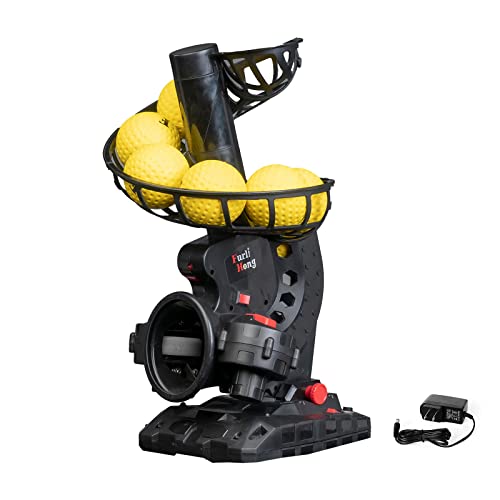
- Reaches 30 MPH for beginner training
- Adjustable wheels support multiple pitch types
- Uses batteries or the included AC adapter
Best For: Introductory practice with sting-free dimpled balls
Best Adjustable Junior Machine
Heater Sports Junior Baseball Pitching Machine

- 15–48 MPH adjustable speed range
- 12-ball automatic feeder
- Stable tripod with enclosed tires
Best For: Kids’ batting practice and backyard training
Best Complete Training Kit
Furlihong 692BH Baseball Pitching Machine

- Includes 60 training balls
- AC or C-battery operation
- Adjustable height and 40-ball basket
Best For: Portable beginner training indoors or outdoors
Best Lightweight Repetition Trainer
SKLZ Pitching Machine for Baseball and Softball

- Lightweight 2.8-pound design
- Automatic 30 MPH soft-ball pitches
- 26-ball capacity with angle adjustment
Best For: Portable swing and repetition drills
Versatile Curveball Trainer – Slider Lite 360
For shoppers comparing baseball pitching machines under 300, the Heater Sports Slider Lite 360 stands out as a portable option for fastball and curveball practice. Its pivoting head delivers 360-degree positioning, while lite balls can reach speeds of up to 80 mph at 46 feet.
Best For: Players and families who want varied pitch practice, including curveballs, in a portable setup.
Pros:
- Throws both fastballs and curveballs for varied hitting practice.
- Lite-ball speeds reach up to 80 mph at 46 feet.
- Tubular steel legs with rubber tips provide a stable base.
- Portable design and quick assembly support flexible training locations.
Cons:
- Designed for lite balls rather than regulation baseballs.
- Its 13-pound weight may be less convenient than lighter toss machines.
The Slider Lite 360 is a strong fit when pitch variety matters most. Its one-year warranty and curveball-focused pivot head add useful value for players building reaction time and swing mechanics.
Rechargeable Training Toss – Furlihong 6902BHA
Among baseball pitching machines under 300, the Furlihong 6902BHA is a practical choice for repeated toss drills without constant bending to reload a tee. It uses a rechargeable battery, offers four speed settings, and releases a ball approximately every six seconds.
Best For: Outdoor baseball or softball practice where portability and consistent toss timing are priorities.
Pros:
- Rechargeable battery supports use away from a power outlet.
- Adjustable height accommodates baseball and softball training.
- Four speed settings provide practice flexibility.
- Consistent six-second tosses reduce manual ball placement.
Cons:
- Balls are not included.
- The listed warranty is 180 days.
- Its 11.6-pound weight is not the lightest in this roundup.
The 6902BHA makes sense for coaches and players who value repeatable tosses and easy relocation. The rechargeable design is especially useful for field sessions, while the included ball tunnels help support setup.
Manual Multi-Ball Trainer – Louisville Slugger Blue Flame
The Louisville Slugger Blue Flame is a versatile option for shoppers seeking baseball pitching machines under 300 without electricity or batteries. Its manual mechanism can throw several ball types, including hard balls, softballs, dimple balls, and plastic or light-flight balls.
Best For: Coaches and players who want a lightweight, manual machine for varied field drills.
Pros:
- Works with multiple ball types, including hard balls and softballs.
- Hard-ball speeds adjust from 18 to 45 mph.
- Light-flight and plastic balls can reach up to 60 mph.
- Manual, sub-25-pound design needs no electricity or batteries.
Cons:
- Manual operation requires the user to set each delivery.
- The listed warranty is only 60 days against defects.
- It is an older model-year design from 2013.
The Blue Flame is best viewed as a flexible drill machine rather than an automated feeder. Its adjustable speeds, level pitches, and ability to produce strikes, fly balls, and grounders make it useful for structured practice sessions.
Power-Free Soft Toss – Furlihong 898BH
For buyers comparing baseball pitching machines under 300, the Furlihong 898BH offers a simple mechanical alternative to powered models. Step on its paddle, release it, and wait about six seconds for the next toss; three angle settings help adapt drills for different ages and skill levels.
Best For: Players and trainers who want a compact, power-free machine for regulation-baseball soft toss drills.
Pros:
- Requires no electricity, batteries, or other power supply.
- Three adjustable angles support different training needs.
- Mechanical construction avoids a circuit system.
- Compatible with extendable stackers for additional ball capacity.
Cons:
- Manual step-on operation is not an automatic pitching cycle.
- The listed warranty is 180 days.
- Its soft-toss format may not suit users seeking high-speed pitching.
The 898BH is a compact, low-maintenance choice for repeatable soft toss work. Its adjustable angle and expandable stacking system make it especially practical for individual practice or coach-assisted drills.
Best Manual Pick – Louisville Slugger Black Flame
For shoppers comparing baseball pitching machines under 300, the Louisville Slugger Black Flame is a practical manual option for repeatable practice without electricity or batteries. It throws regulation baseballs up to 50 MPH and can also handle softballs and several other ball types.
Best For: Backyard, park, and field practice for youth through high school hitters who want batting and fielding versatility.
Pros:
- Works without electricity, batteries, or ongoing maintenance.
- Throws baseballs up to 50 MPH and softballs up to 44 MPH.
- Supports batting, high fly balls, and ground-ball practice.
- Offers three adjustable speed and height settings.
Cons:
- Manual operation requires resetting the arm between pitches.
- For maximum consistency, the manufacturer recommends pitching-machine balls.
- Warranty coverage is limited to 60 days against defects.
The Black Flame stands out when portability and all-location use matter more than automatic feeding. Its regulation-ball compatibility and fielding modes make it a flexible choice for broader practice sessions.
Best Automatic Feeder – Heater Sports Base Hit
Among baseball pitching machines under 300, the Heater Sports Base Hit is a lightweight choice for continuous batting practice. It throws real baseball pitches up to 45 MPH and includes an automatic feeder that releases a ball every eight seconds.
Best For: Hitters and families seeking hands-free baseball and fielding practice with a portable machine.
Pros:
- Throws real baseball pitches up to 45 MPH from 46 feet.
- Includes a removable 12-ball automatic feeder.
- Adjustable head supports fast ground balls and high pop flies.
- Lightweight 15-pound design is easy to move.
Cons:
- For consistent performance, Heater Sports recommends its dimpled baseballs.
- The feeder releases one ball every eight seconds, which may not suit rapid drills.
- Its listed weight is about 15.6 pounds, so it is portable but not ultralight.
The Base Hit is a strong fit if automatic feeding is a priority. Its adjustable pitching head adds fielding versatility, while the one-year U.S. warranty provides longer stated coverage than some alternatives here.
Best Beginner Option – Furlihong 3801BH
For beginners shopping among baseball pitching machines under 300, the Furlihong 3801BH offers a compact electronic training setup. It reaches up to 30 MPH, runs from four D batteries or the included AC adapter, and uses lightweight polyurethane dimpled balls rather than regulation baseballs.
Best For: Beginner players who want adjustable fastball, curve, and slider practice with sting-free training balls.
Pros:
- Adjustable wheels control speed and angle for multiple pitch types.
- Runs on four D batteries or the included 6V AC adapter.
- Includes eight polyurethane dimpled training balls.
- Compact design weighs about 1.96 kilograms in the package.
Cons:
- Maximum speed is 30 MPH, so it is aimed at beginners rather than advanced hitters.
- Cannot use regulation baseballs.
- D batteries are not included, and the machine requires a short wait after startup before launching.
The Furlihong is best viewed as an introductory trainer, not a regulation-ball pitching machine. Its adjustable pitch angles, sting-free balls, and dual power options make it approachable for early skill development.
Best Adjustable Junior Machine – Heater Sports Junior Baseball Pitching Machine
For shoppers comparing baseball pitching machines under 300, the Heater Sports Junior stands out for its adjustable speed and angle controls. Its 1/4-horsepower motor, automatic feeder, and stable tripod are suited to structured backyard batting practice.
Best For: Kids’ batting practice, skill development, and backyard training.
Pros:
- Adjustable pitching speeds from 15 to 48 MPH.
- 12-ball automatic feeder releases a ball every 10 seconds.
- Heavy-duty tripod and enclosed air-filled tires support stability and safety.
- 1/4-horsepower DC motor provides consistent pitching performance.
Cons:
- At 23.5 pounds, it is less lightweight than compact training machines.
- The supplied details do not specify included baseballs.
This is a strong choice when you want more speed range and a sturdier setup than a basic entry-level trainer. Its feeder and adjustable controls make repeat practice more convenient.
Best Complete Training Kit – Furlihong 692BH Baseball Pitching Machine
Among baseball pitching machines under 300, the Furlihong 692BH is a compact option that includes 60 training balls out of the box. Its battery or AC operation and adjustable height make it flexible for indoor or outdoor practice.
Best For: Beginners and families wanting a portable, ready-to-use training kit.
Pros:
- Includes 60 training balls for immediate practice.
- Runs on AC power or C batteries.
- Top basket holds up to 40 balls to reduce reloading.
- Height and pitching angle can be adjusted with the screw bolt.
Cons:
- The 18 MPH pitch uses a smaller 5-inch-circumference training ball rather than a standard baseball.
- Its 180-day warranty is relatively limited.
- The plastic construction may be less rugged than heavier machines.
The Furlihong emphasizes convenience and portability over maximum pitching speed. Its included balls, dual power options, and large basket make it a practical starter package.
Best Lightweight Repetition Trainer – SKLZ Pitching Machine for Baseball and Softball
For those narrowing down baseball pitching machines under 300, the SKLZ Pitching Machine focuses on simple, repetitive hitting drills. It automatically throws soft practice balls at 30 MPH, with a five-second delay between pitches and an angle adjustment for different locations.
Best For: Portable baseball and softball swing practice with soft training balls.
Pros:
- Lightweight 2.8-pound design is easy to carry.
- Automatically pitches soft practice balls at 30 MPH.
- Five-second delay supports repetition training.
- Holds up to 26 balls and offers adjustable pitching angles.
Cons:
- The supplied details do not specify a power source.
- It is designed for soft practice balls, which may not match standard-ball training.
- The 30 MPH speed is fixed rather than variable.
This machine is a convenient pick for quick drills and portability. Choose it when lightweight handling and automatic soft-ball repetition matter more than variable speed or heavier-duty construction.
How We Picked the Best Baseball Pitching Machines Under 300
We evaluated these machines around the factors that matter most during real batting practice: delivery consistency, pitch-speed adjustability, setup time, portability, power requirements, ball compatibility, and overall usefulness for baseball or softball drills. We also considered whether each model is better suited to beginners, youth players, casual backyard practice, or more structured training.
At this price, you will find both mechanical launchers and electronic machines. Mechanical models generally require less maintenance and no batteries, while electronic options may offer more repeatable delivery and easier adjustments. Product descriptions and included accessories were also considered, since feeders, practice balls, and transport-friendly designs can add practical value.
Quick Comparison
| Best For | Look For | Typical Advantage |
|---|---|---|
| Young beginners | Lower speeds and simple controls | Confidence-building practice |
| Backyard batting | Portability and adjustable angles | Easy setup and storage |
| Frequent solo practice | Automatic feeder or large ball capacity | More repetitions with less assistance |
| Baseball and softball families | Compatible balls and broad adjustment range | One machine for multiple players |
| Travel or field use | Manual operation and no power supply | Flexible use away from outlets |
Key Buying Factors for Baseball Pitching Machines Under 300
Pitch Speed and Adjustment Range
Choose a speed range that matches the hitter’s age and ability. Younger players benefit from slower, predictable deliveries, while experienced hitters may want faster pitches or more challenging angles. A wide adjustment range makes the machine useful as the player improves.
Ball Type and Compatibility
Some machines are designed for real baseballs, while others work best with lightweight practice balls or included plastic balls. Check the manufacturer’s recommendations before buying. Using incompatible or excessively heavy balls can reduce accuracy and strain the machine.
Feeding and Power
An automatic feeder is valuable for solo practice because it reduces interruptions between swings. Battery-powered models offer convenient placement, but you should verify runtime and charging requirements. Manual machines can be preferable when you want simple, dependable operation without cords or batteries.
Portability and Setup
For shared yards, garages, or frequent field sessions, prioritize a lightweight design, integrated handle, stable base, and quick adjustments. Also measure your available hitting area and allow enough distance for the machine to deliver safely.
Safety and Practice Space
Always use an appropriate net or protective screen, inspect the machine before operation, and keep spectators outside the hitting zone. Begin at the lowest practical speed and follow the recommended distance, ball type, and age guidance.
Who Should Buy Which Baseball Pitching Machines Under 300?
Choose a beginner-focused or junior model for younger hitters who need slower, confidence-building repetitions and straightforward controls. Choose an automatic electronic model if solo practice and consistent feeding are the priorities. Choose a manual Louisville Slugger or similar launcher if you value durability, simple operation, and use without an outlet. Choose an adjustable real-ball machine for older youth or recreational players who want more realistic batting practice. Finally, choose a portable toss machine when quick setup, travel, and close-range drills matter more than full-speed pitching.
Before ordering, confirm the machine’s supported ball type, maximum speed, power source, included accessories, and return policy. The best value is the model that matches the hitter’s current skill level while leaving enough adjustment room for future practice.